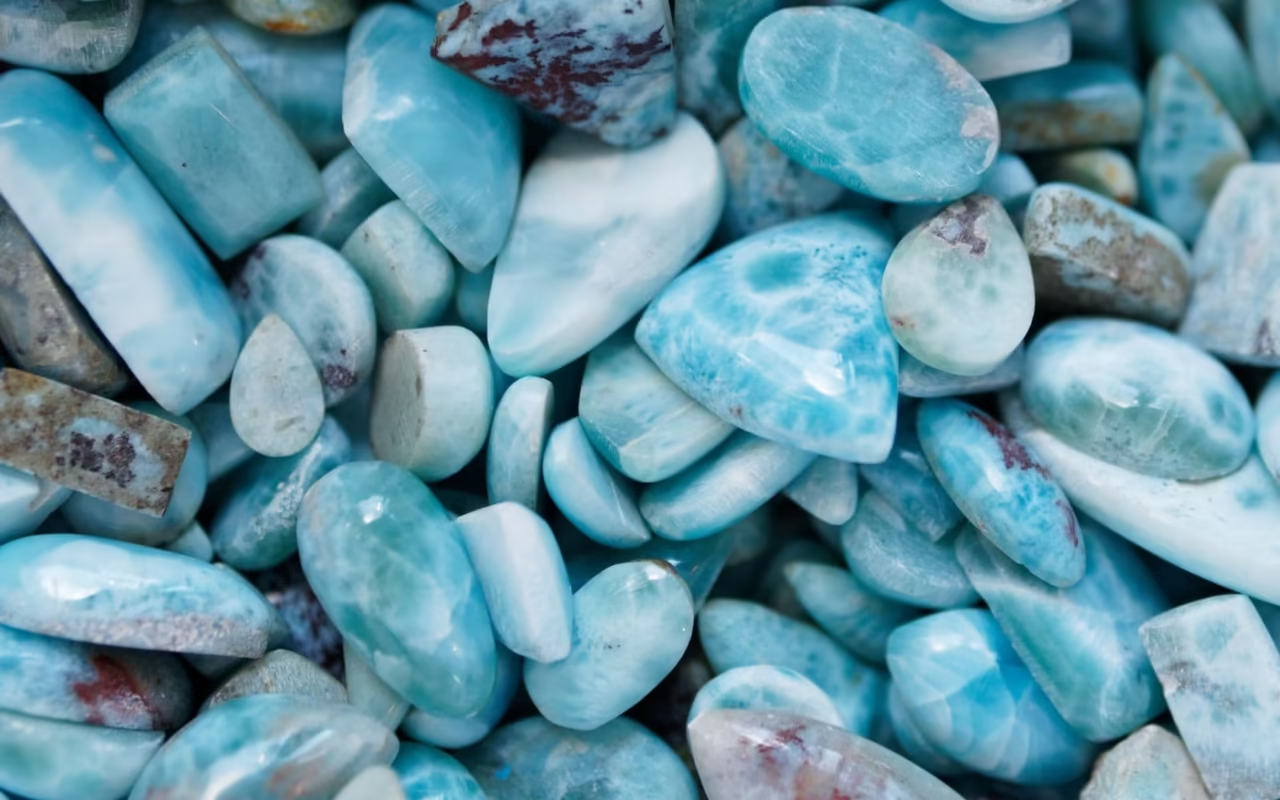
Larimar is a blue pectolite mined from a single deposit in the world, located in Los Chupaderos, 10 km southwest of Barahona, in the Dominican Republic. In operation since 1974, the mine has about 90 shafts and provides a livelihood for more than 700 miners. The stone is processed on site; exporting it in its raw state is prohibited. Allow a full day from Barahona to visit the mine and the workshops.
Few travelers know this, but the Dominican Republic is home to one of the world’s rarest semiprecious stones: larimar. This blue stone, with its ocean-like shimmer, is found nowhere else on the planet. Mined in the mountains of the southwest, it tells a story that blends volcanism, local craftsmanship, and Dominican identity. Discovering larimar in its place of origin goes far beyond simply admiring a piece of jewelry: it means understanding a region and meeting the people who call it home.
What is larimar?
Larimar is a blue variety of pectolite, a mineral belonging to the silicate group. Its colors range from very pale blue— almost white— to deep blue, sometimes crisscrossed with patterns reminiscent of Caribbean waves. According to experts, these exceptional hues are linked to its volcanic origin, dating back more than 100 million years.
The name “larimar” comes from the combination of “Larissa,” the first name of Miguel Méndez’s daughter, and the word “mar,” meaning “sea.” Although traces of the stone were first observed as early as 1916 by Father Miguel Fuentes, it was officially rediscovered in the 1970s in Barahona.
November 22 has been declared National Larimar Day by the Dominican Congress (Law 17-18), highlighting its cultural and heritage significance.
A Stone with Symbolic Virtues
Beyond its beauty, larimar is often associated with soothing properties. In crystal healing, it is believed to have the ability to calm emotions, reduce stress, and promote inner harmony. It is traditionally linked to the throat chakra, a symbol of communication and self-expression.
Larimar and Barahona: An Inseparable History
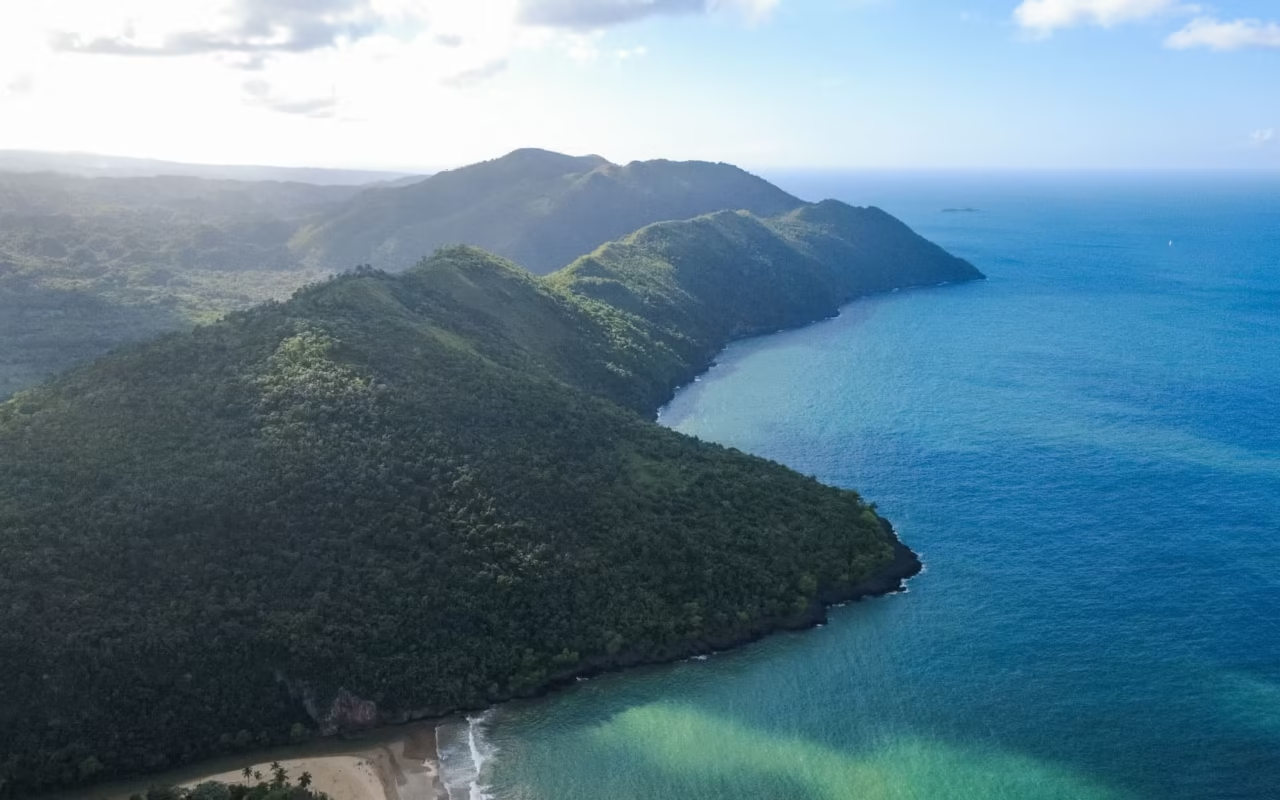
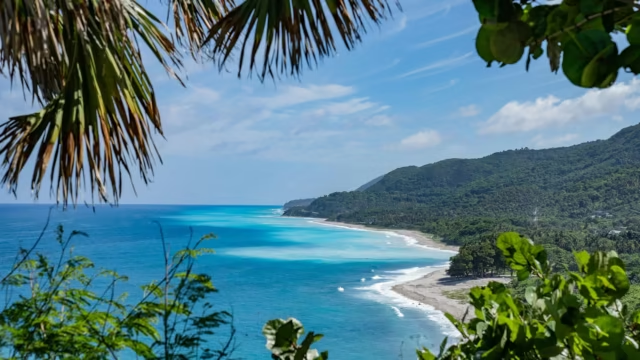
Larimar is mined exclusively in the Sierra de Bahoruco, in the heart of a mountain range. Today , this activity serves as the economic lifeline for many families in the Barahona region, who are involved in the mining, cutting, and processing of the stone.
Another key distinction: raw larimar cannot be exported. All pieces are therefore cut and crafted locally, ensuring 100% Dominican craftsmanship.
How much does larimar cost?
There is no official market price for larimar. The price is negotiated on a per-stone basis and depends on four factors: the intensity of the blue, the uniformity of the color, the fineness of the white pattern, and the weight. A pale, gray, or greenish stone is worth a fraction of what a deep blue stone of the same size is worth.
The market classifies cut stones by grade. Grade AAA denotes a deep, even blue with distinct marbling. This is the terminology you’ll hear in the workshops of Bahoruco as well as in jewelry stores in Santo Domingo.
| Grade | Color | Common usage |
|---|---|---|
| AAA | Deep blue, even hue, distinct white pattern | Jewelry, collectibles |
| AA | Medium blue, with a few lighter areas | Everyday jewelry |
| A | Pale blue, with traces of gray or green | Small cabochons, souvenirs |
| Raw | Uncut, varying quality | Collection, cut on-site |
Buying in the region where it’s mined is cheaper than in Punta Cana or Bávaro, where the same stone passes through several middlemen. The blue stone that travelers seek under the name “Punta Cana stone” is this larimar, brought up from Barahona.
How can you tell if a larimar is real?
Imitations are circulating, made of dyed resin or colored calcite. Four simple checks are usually enough.
- The pattern: the white marbling never repeats from one stone to another. Two identical cabochons should raise a red flag.
- Hardness: Pectolite ranks between 4.5 and 5 on the Mohs scale. A stone that easily scratches glass is not larimar.
- Feel: The stone remains cool to the touch for a few seconds, unlike resin.
- Name: The term “Dominican turquoise” is prohibited by the CIBJO’s professional nomenclature. A seller who uses it is describing something else.
The Larimar Experience with Terra Dominicana
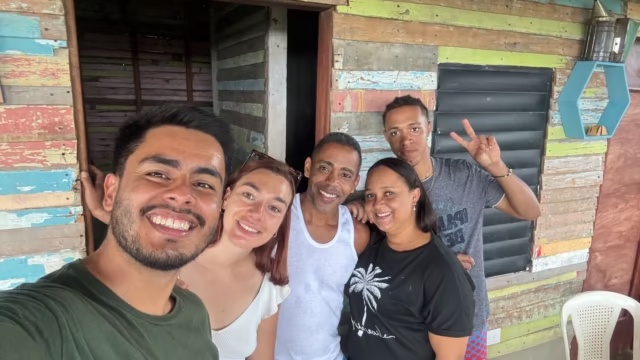
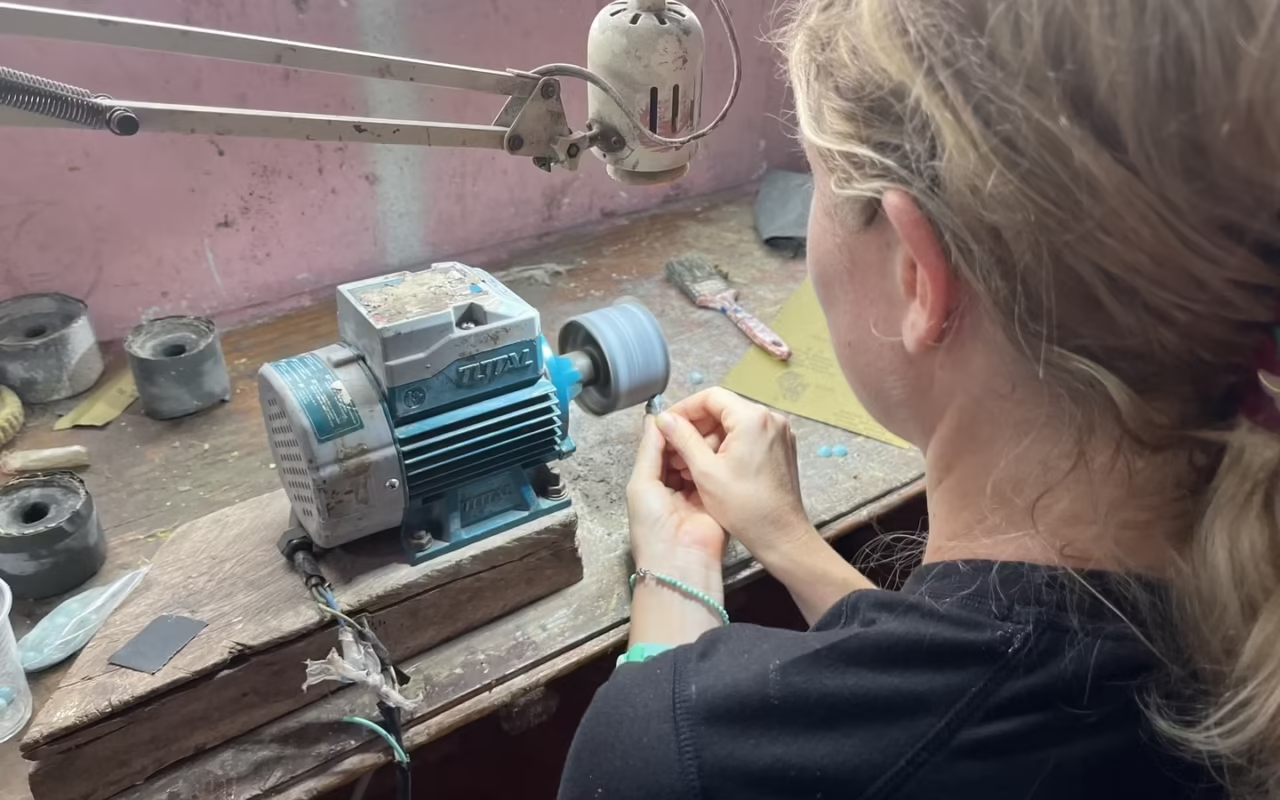
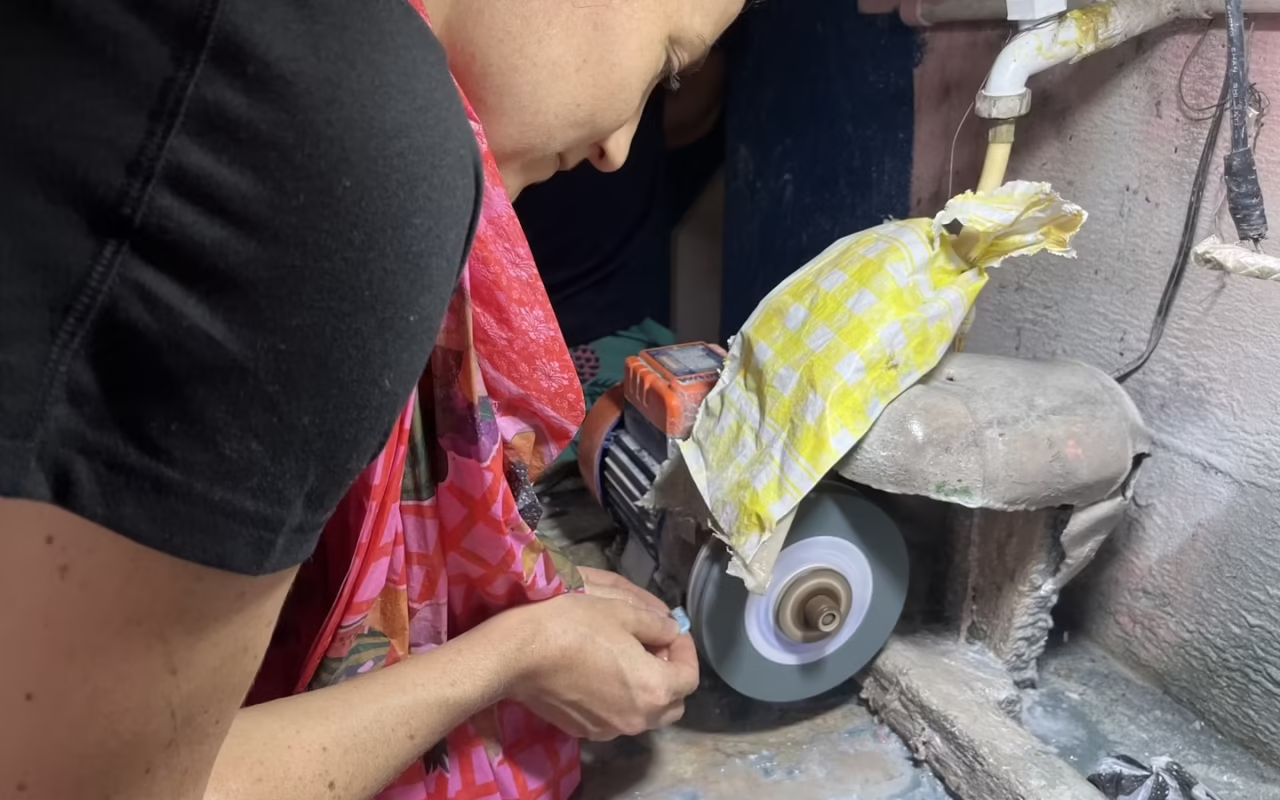
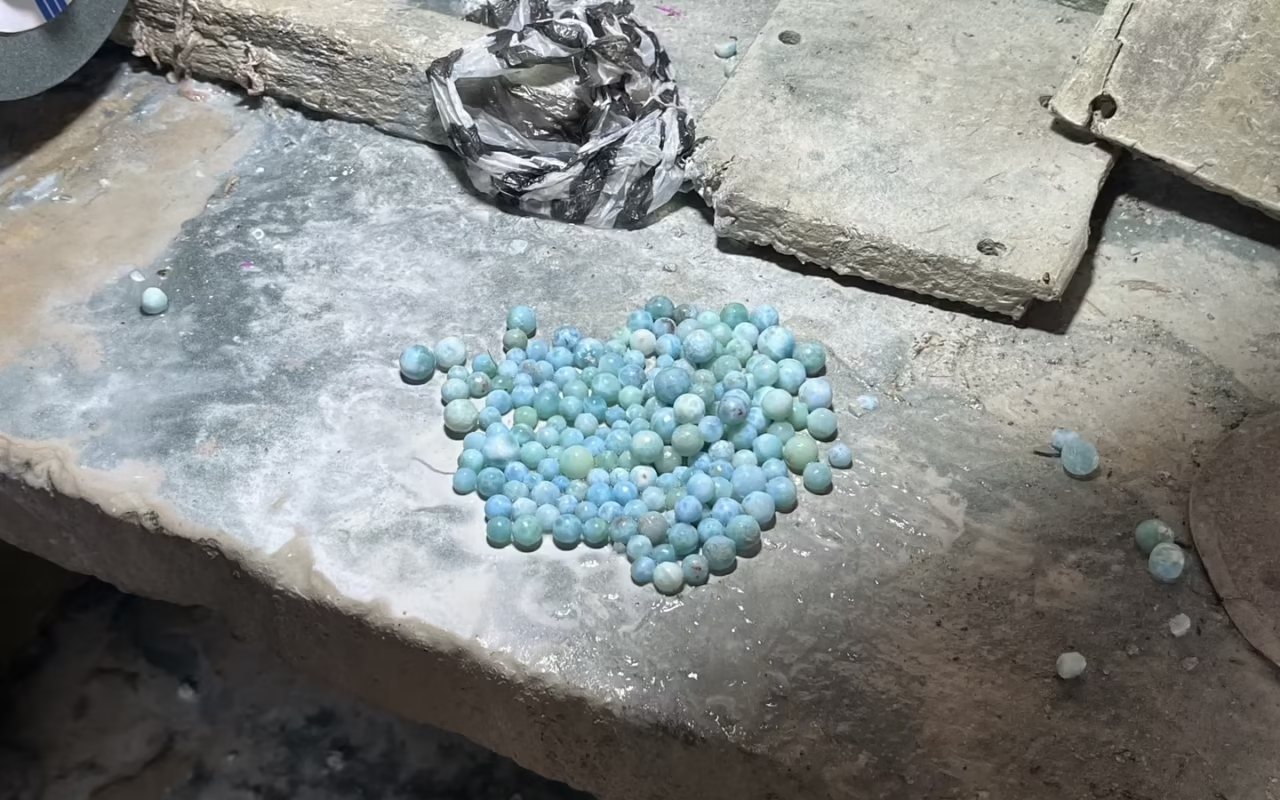
Come meet the Larimar artisans! You’ll visit their workshops to discover every step in the process of transforming this unique stone: cutting, sanding, and polishing. It’s an opportunityto talk with the artisans, learn about their craftsmanship, and even cut and polish your own stone. If you’d like, you can also choose a piece directly from the source.
Where can you find larimar in the Dominican Republic?
The deposit is located in the Los Chupaderos area, Los Checheses section, about 10 km southwest of Barahona and 200 km from Santo Domingo. The trail leading up to it requires a high-clearance vehicle. The shafts are up to 50 meters deep, and miners descend them using rappelling techniques while wearing harnesses. The tour takes place above ground and is guided: visitors can observe the winch, the sorting process, and the hoisting of the blocks, but not the descent itself.
A few kilometers away, in Bahoruco, the Larimar Workshop School and Museum has been training gem cutters since 2014. Approximately 1,500 students have passed through the program, and the district now has nearly 70 workshops. It’s the best place to see the stone transform from a rough block into a cabochon—and to buy directly from the artisan who cut it.
How do you care for a larimar?
Larimar is photosensitive: prolonged exposure to sunlight causes the blue color to fade. Store your pieces away from light.
- Cleaning: lukewarm water, mild soap, and a soft cloth. Dry immediately.
- Avoid: ultrasonic cleaners, steam, household cleaning products, pool water, and seawater.
- Wearing: Remove the jewelry before going to the beach, exercising, or doing housework. The stone scratches more easily than quartz.
- Storage: Lay flat in a cloth, separated from harder stones.
Tips for Choosing a Larimar
- Look for intense, deep blues—a sign of quality
- Buy from trusted sellers or workshops, ideally with a certificate (it’s best to ask one of our guides for help!)
- Buy this stone in its region of origin rather than elsewhere in the country.
- Opt to discover it in person to understand the story behind the stone.
- Bringing this stone back as a souvenir is an excellent idea and a deeply meaningful gift!
Conclusion
Larimar is much more than just a stone: it’s a symbol of the southern Dominican Republic, of Barahona, and of the relationship between nature, culture, and local craftsmanship. Discovering it in its region of origin adds a whole new dimension, rich in history and meaning.
Frequently Asked Questions About Larimar
Is larimar found anywhere other than the Dominican Republic?
No. Pectolites are found on several continents, but the blue variety sold as larimar comes from a single deposit in Los Chupaderos, near Barahona. Any stone sold as larimar from another source is either a different mineral species or an imitation.
Is the larimar mine closed?
No. Several retailers claim otherwise. In September 2025, the Dominican Ministry of Energy and Mines described an active mine with approximately 90 shafts and more than 700 miners. A safety program has been in place there since 2020, including gas monitoring, tunnel reinforcement, and a medical station.
Can you bring back rough larimar from the Dominican Republic?
Exporting the stone in its raw state is prohibited. Pieces that have been processed locally—whether cut or set in jewelry—can be brought back without any difficulty. Be sure to keep the receipt from the workshop.
Why is larimar called the “stone of Atlantis”?
The nickname comes from a reading by the American psychic Edgar Cayce, who reportedly predicted the discovery of a blue stone on a Caribbean island. There is no archaeological or geological evidence to support this connection. The official name, however, comes from Larissa, the daughter of Miguel Méndez, and “mar.”
What is the difference between blue larimar and green larimar?
The green hue is due to the composition of the deposit at the extraction site. It sells for less than the vivid blue variety, though it is not a counterfeit. The reddish shades, which are rarer, come from iron inclusions.
Updated: August 7, 2026
About the Author
Laura Grenouillet is the founder and travel consultant at Terra Dominicana. Based in the Dominican Republic, she has been exploring the southwestern regions—particularly Barahona and the Sierra de Bahoruco—for several years. Passionate about cultural experiences and connecting with locals, she guides travelers on a thoughtful and meaningful journey of discovery through the country.
Sources
- Go Dominican Republic, Larimar Mine, 2026
- Ministry of Energy and Mines, “More Than Just a Semiprecious Stone,” 2026
- EFE News Agency, report on the larimar mine, September 12, 2025, data from the Ministry of Energy and Mines: 90 shafts, more than 700 miners, 30 deaths since 1974
- Larimar Workshop School and Museum, Bahoruco, training data since 2014
- Field observations and local partners Terra Dominicana, 2025