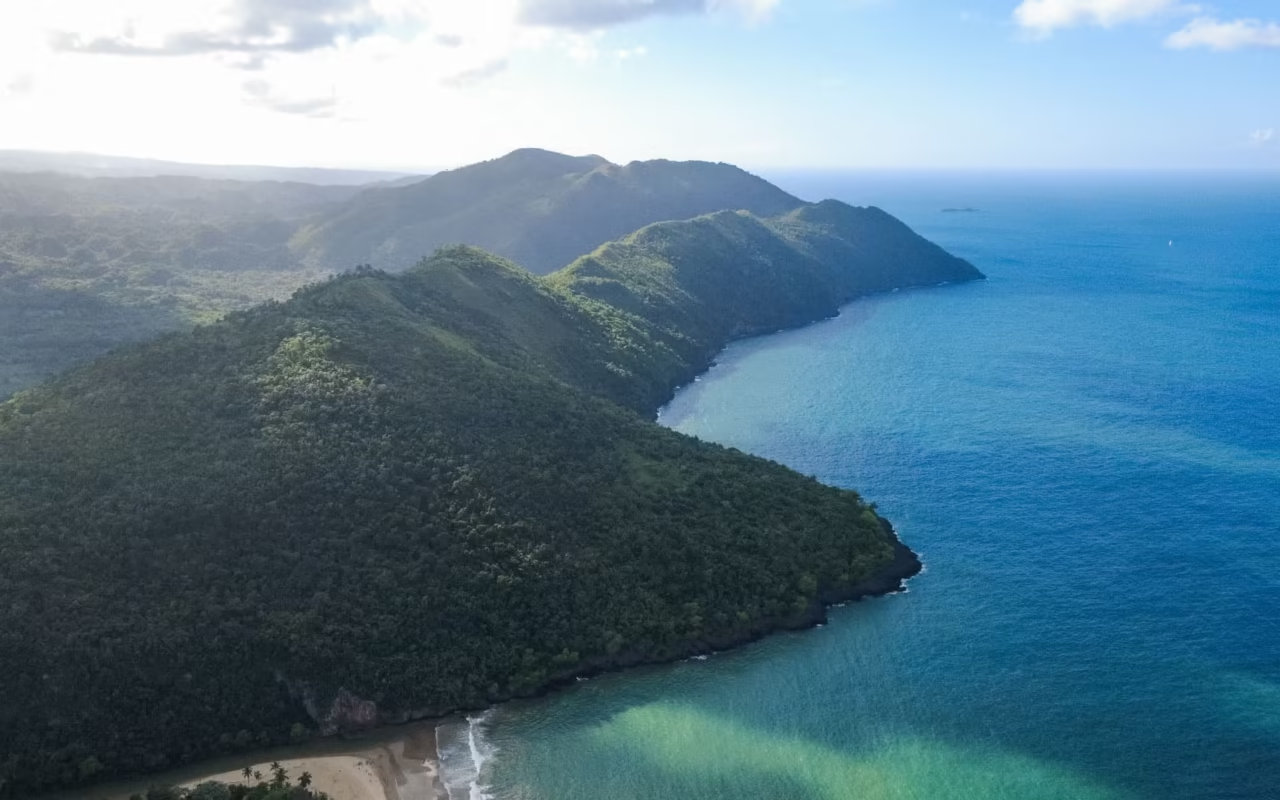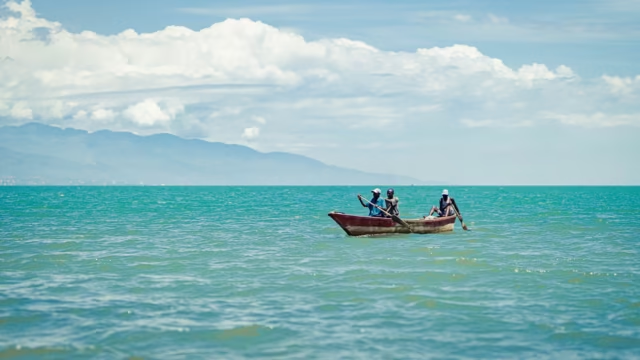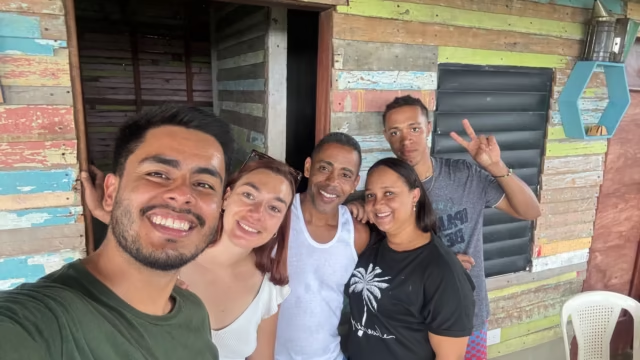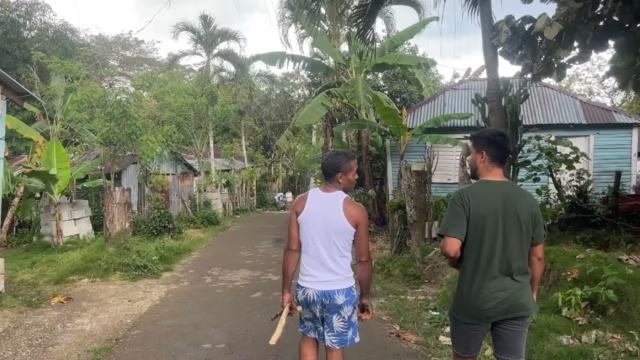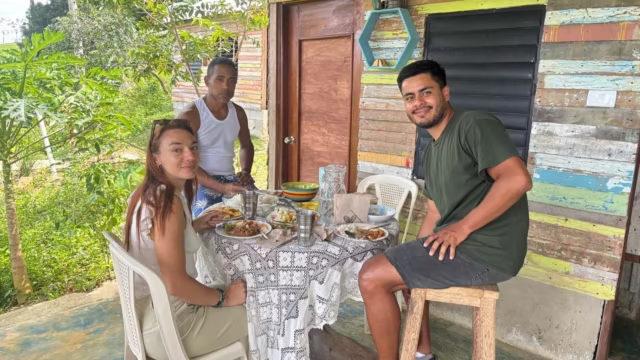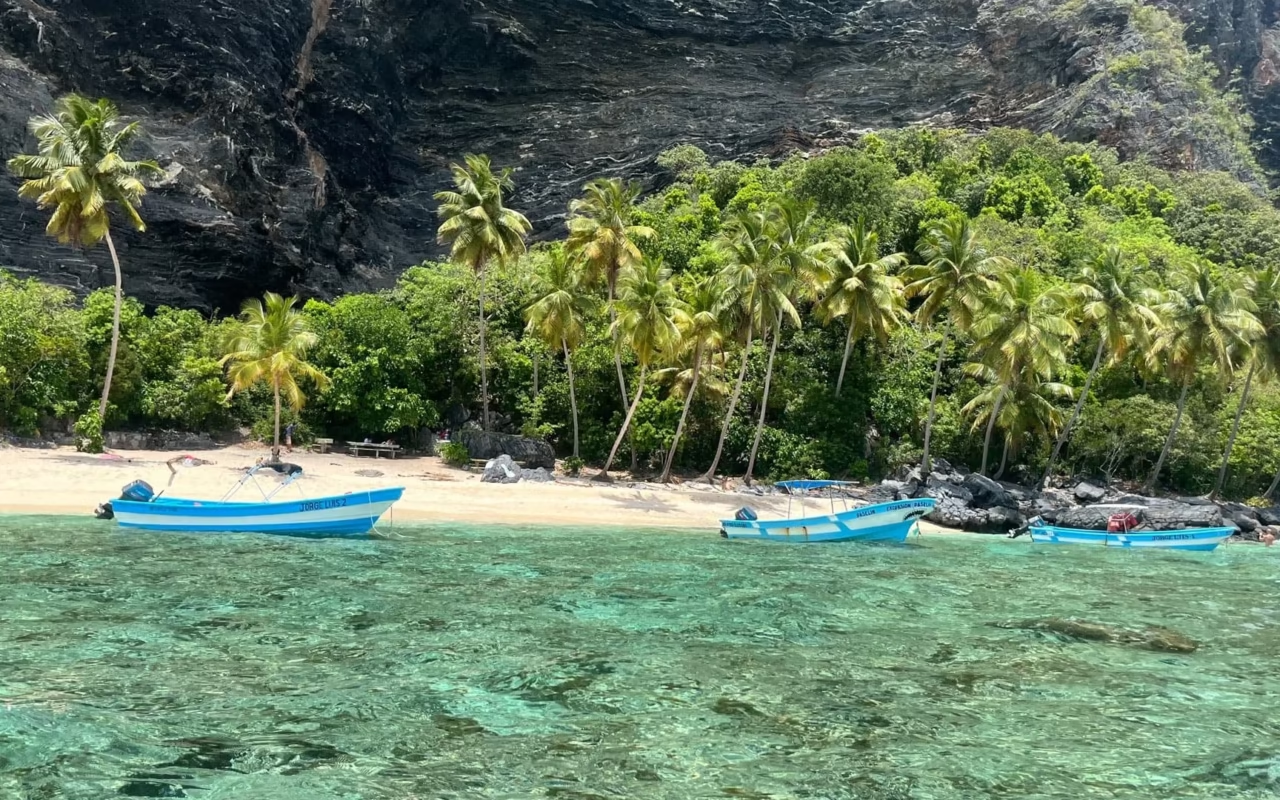
Las Galeras and El Valle mark the northeastern tip of the Samaná Peninsula. The first village is 27 km from Santa Bárbara de Samaná, about a 35- to 40-minute drive along the coastal road. Both border Cabo Cabrón National Park, a 35.87-km² area that has been protected since 1996. Plan on spending 3 to 5 nights there, and visit between January and March to see humpback whales.
Where are Las Galeras and El Valle located?
The two villages are located at the northeastern tip of the Samaná Peninsula in the Dominican Republic. A single coastal road connects Santa Bárbara de Samaná to the first village, while a mountain road leads to the second. Neither village can be driven through—they are dead ends—which explains why they remain relatively quiet even during peak season.
At Terra Dominicana, we use them as bases for a nature-oriented getaway. There you’ll find small-capacity eco-lodges, undeveloped beaches, and direct access to the natural sites at the tip of the peninsula.
| Route | Estimated travel time | Route |
|---|---|---|
| From Santa Bárbara de Samaná to Las Galeras | 35 to 40 min (27 km) | Coastal, paved |
| Santa Bárbara de Samaná to El Valle | 20 to 45 min depending on road conditions and vehicle | Mountain road, with some rough sections |
| Las Terrenas to Las Galeras | 1 hour 15 minutes to 1 hour 30 minutes | Paved, via Samaná |
| El Catey Airport (AZS) to the tip | About 1 hour 30 minutes | Paved |
| Santo Domingo to the tip | About 4 hours | Highway then coastal road |
What is there to do in Las Galeras?
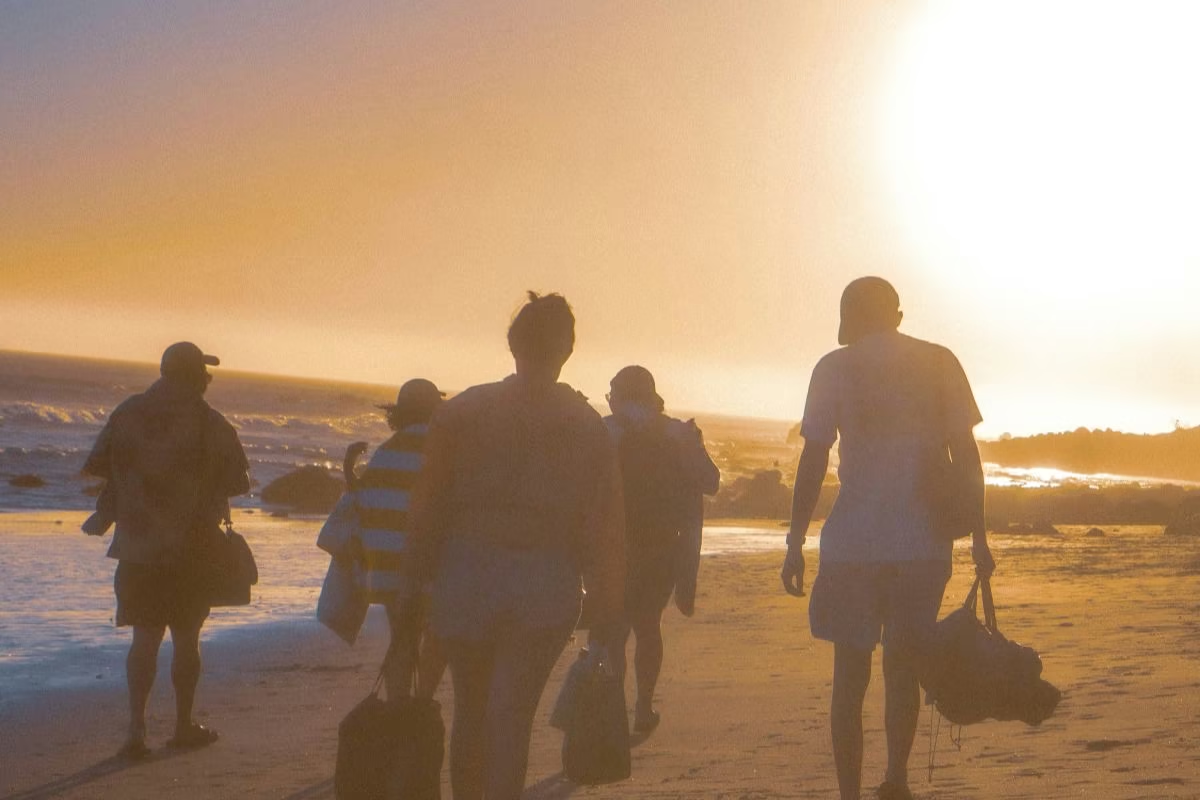
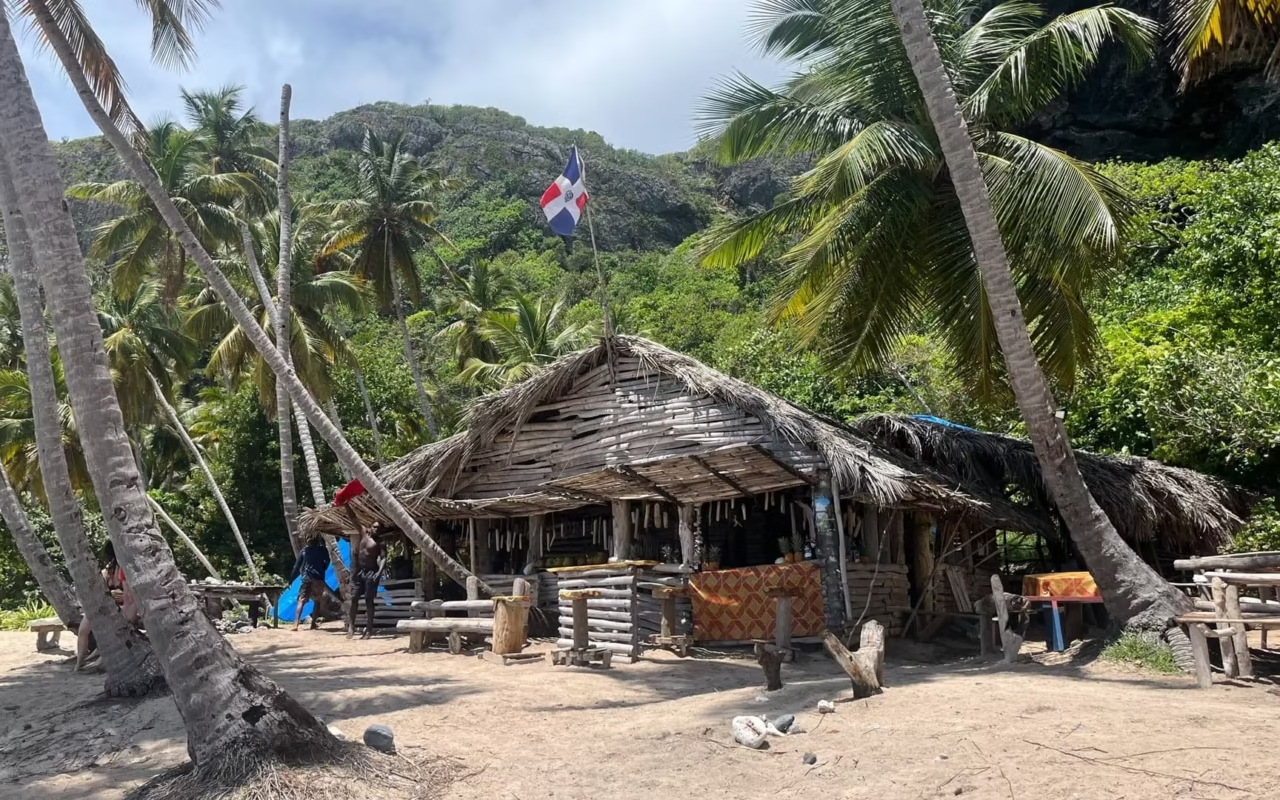
The village is spread out along a few streets parallel to Playa Grande, the town’s beach. Restaurants, small lodging options, and shops are all within a ten-minute walk of each other. Playa Grande is rocky and exposed: people tend to sit there rather than swim; swimming is best done at the neighboring beaches.
The headland is home to several attractions that can be reached in half a day from the village.
- La Boca del Diablo, a sea stack where the swell rushes into the rock and surges several meters high in rough seas.
- La Hondanada, a rocky arch forming a natural pool. The scenery is spectacular, but swimming is not recommended.
- The Río Caño Frío, a freshwater river that flows into the end of Playa Rincón; you can travel upriver by boat through the vegetation.
- Diving on the drop-offs at Cabo Cabrón and Puerto Escondido, renowned as some of the best sites on the peninsula, both day and night.
- A small-group fishing trip out to sea with local fishermen, departing from the village pier.
Almost all of the beaches on the headland can be reached by boat from the village pier or on foot via coastal trails. Negotiate the boat fare directly with the fisherman before boarding, and agree on a return time. Otherwise, the boatman—often just one hour—will decide how long you can stay.
Which beaches are worth visiting near the village, and how do you get there?
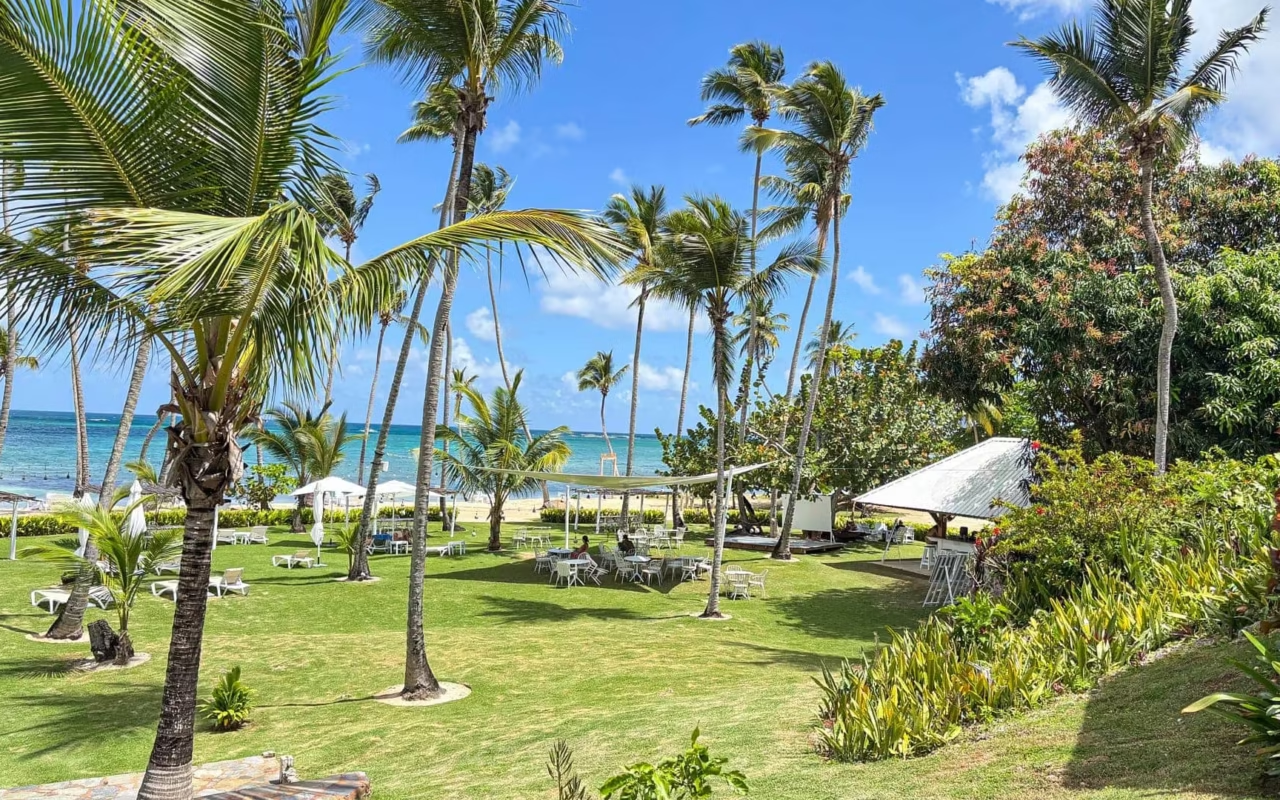
The five beaches mentioned in every guidebook are not all the same in terms of access or use. Here’s what you need to know about each one.
| Beach | Access | Travel time from the village | What it’s for |
|---|---|---|---|
| Playa Rincón | By boat or 4×4 trail | 20 to 30 min by boat, about 30 min by 4×4 trail | 3 km of sandy beach, Caño Frío River, seafood meal on the beach |
| Playa Frontón | By boat or trail from the Mina de Mármol | 20 to 30 min by boat, 5.5 km walk each way | Cliffs, snorkeling on the reef |
| Playa Madama | By boat or along the forest trail | 30- to 45-minute walk | Small, sheltered cove, calm swimming |
| La Playita | Road followed by stairs | 10-minute drive | Easy swimming, the most accessible |
| Playa El Valle | Mountain road, El Valle side | Not accessible from the village via the coast | 4 km of golden sand, strong swells, surfing |
Playa El Valle is often described as a beach in the fishing village. It is located in the El Valle area, on the other side of the mountain range, and can be reached via the mountain road, not along the coast.
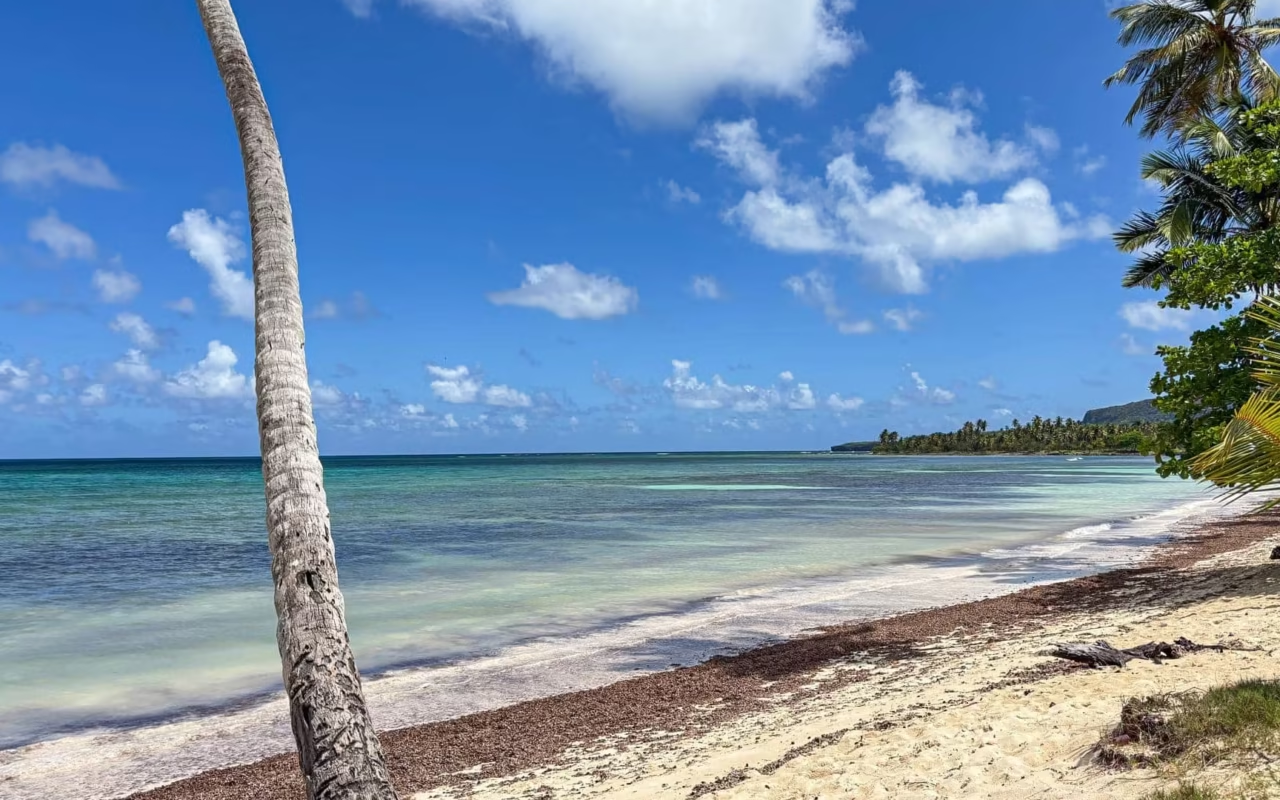
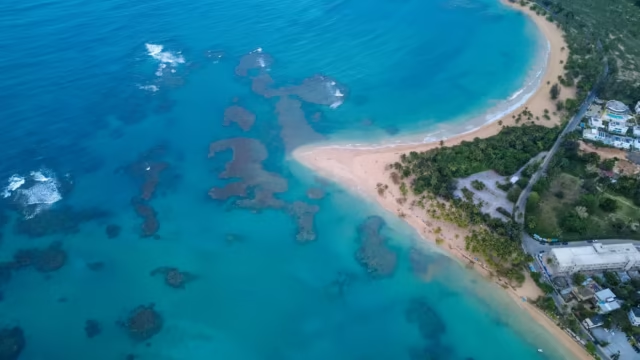
Playa Rincón stretches 3 km of white sand between Cape Samaná and the cliffs of Cabo Cabrón, with no hotels on the beach. At its western end, the Río Caño Frío flows into the sea and forms a freshwater pool. The western part is calm, while the eastern part is exposed to swells. The access road is unpaved and becomes impassable after heavy rain; taking a boat is more reliable during the rainy season.
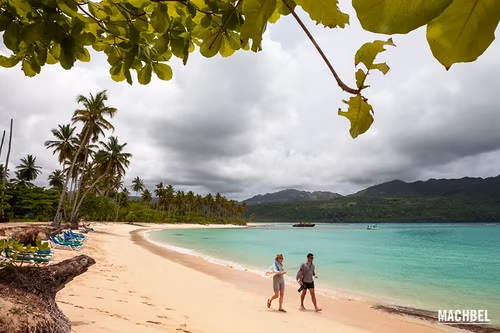
« The Ministry of the Environment describes Cabo Cabrón as a steep, mountainous cape. Its coastal boundaries extend from the eastern end of Playa El Valle to the western end of Playa Rincón, covering about 20 kilometers of protected coastline. »
El Valle—what is this village like?
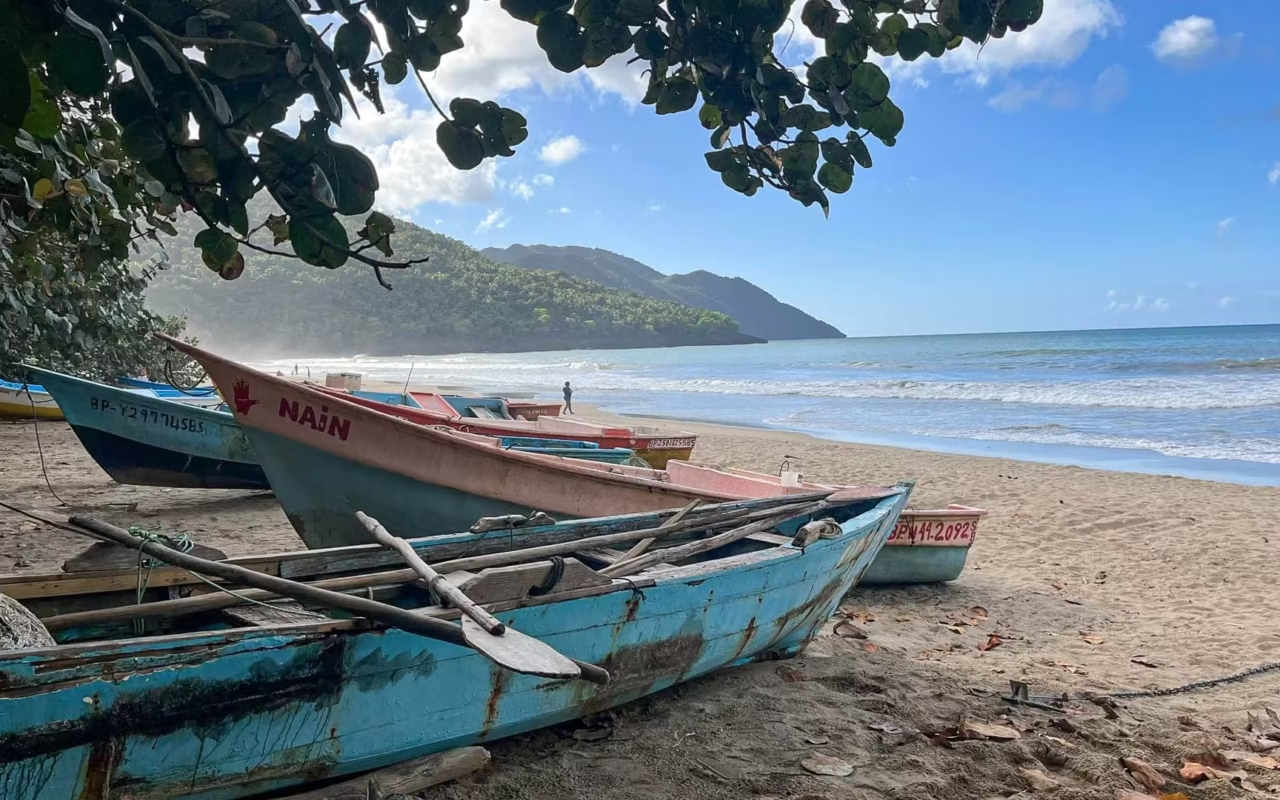
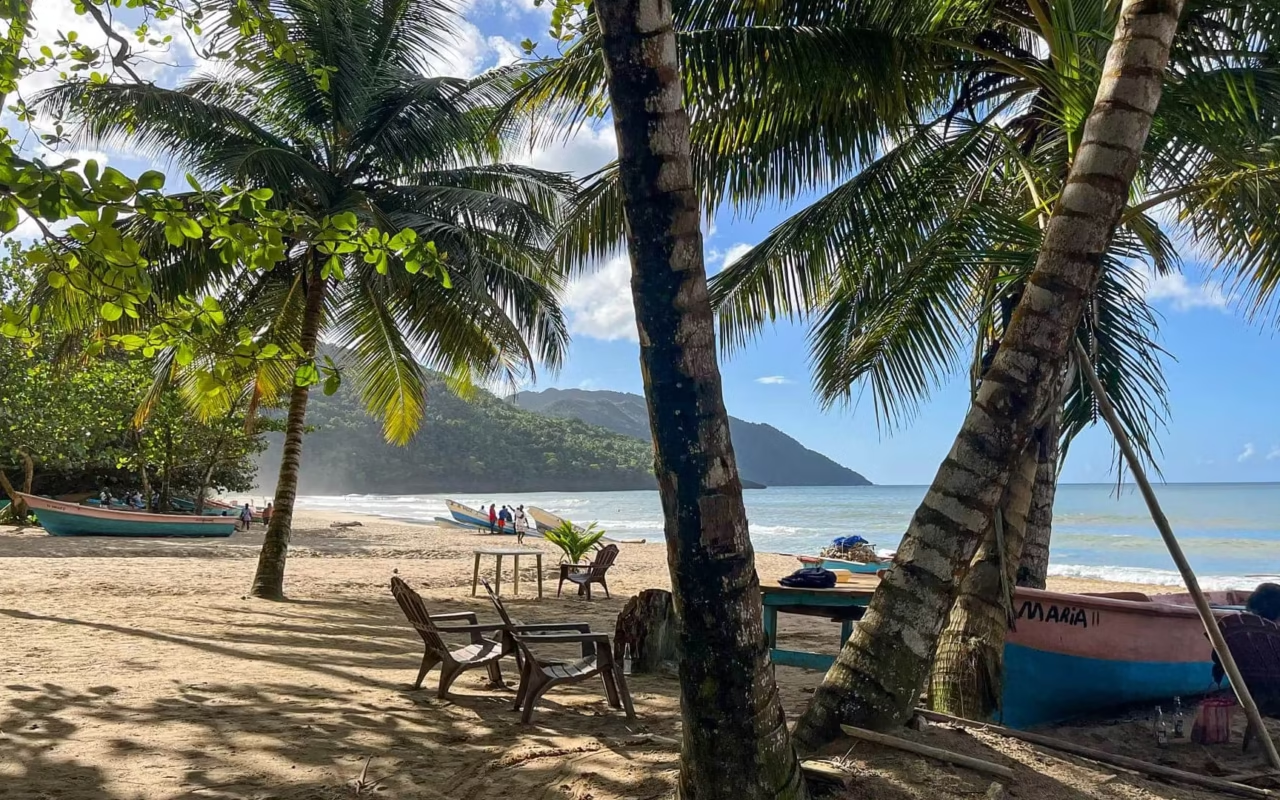
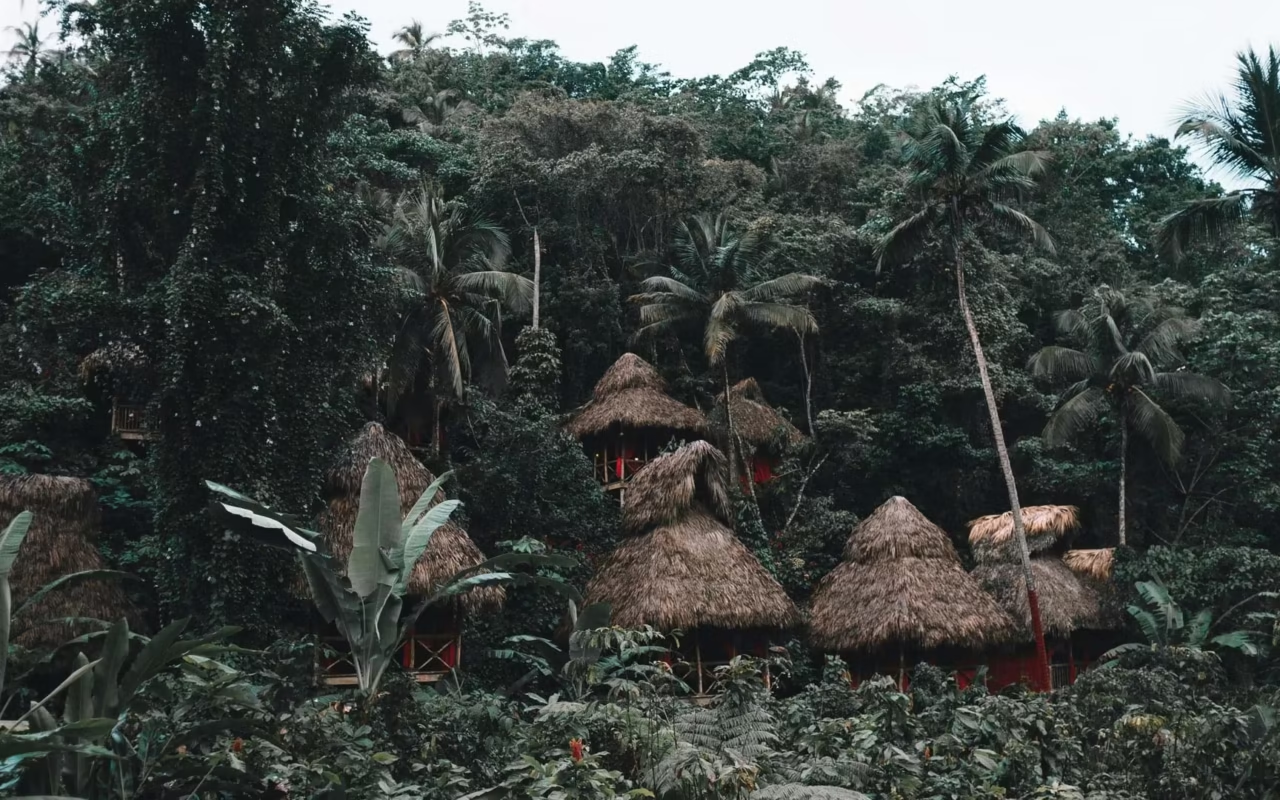
El Valle lies in a valley opening onto the Atlantic, between two wooded ridges. The village consists of just one main street that winds down to the beach. Development here has remained minimal, and lodging options are limited to a few lodges and guesthouses that blend into the landscape.
The 4-km-long beach experiences a distinct swell for part of the year, making it more of a surfing spot than a family swimming beach. A river flows into the sea from the west, forming a freshwater lagoon where you can swim without the risk of strong currents.
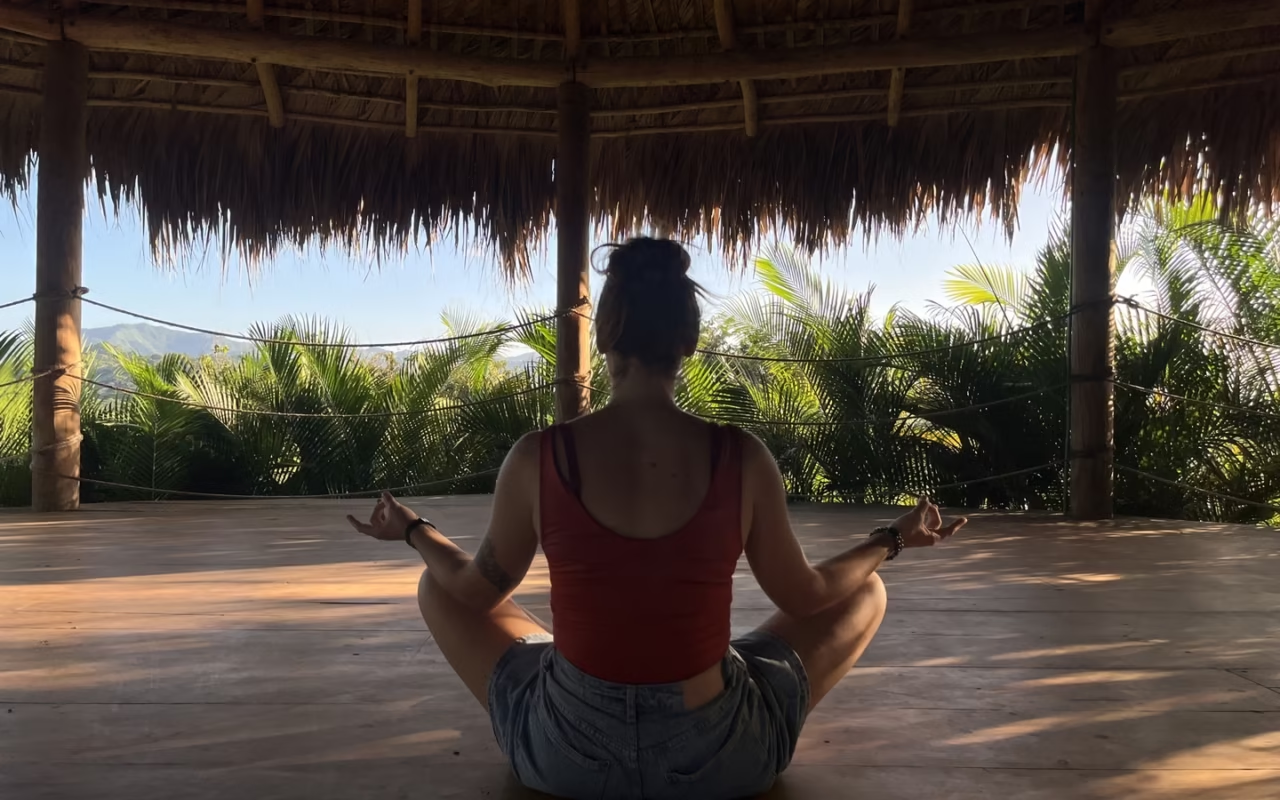
Around the village: a zip line through the canopy, waterfalls accessible on foot or on horseback in half a day, and yoga sessions offered by the lodges. The neighboring Playa Ermitaño has no road access and can be reached by boat or via a trail.
Be sure to bring cash: there are no ATMs in the village, and card payments are limited to accommodations.
When is the best time to visit the Samaná Peninsula?
The cape receives approximately 2,400 mm of rainfall per year, with temperatures ranging from 24 to 26 °C. Rainfall is scarce from December through April and increases from May through November. The Atlantic hurricane season runs from June through November.
From January through March, humpback whales come to Samaná Bay to mate and give birth. At least 252 individuals have been identified there, according to the International Whaling Commission, and whale-watching has been taking place since 1985. This is also the time when the coastal trails are most accessible and underwater visibility is at its best.
September and October see the highest risk of disturbances and the highest humidity. The trail to Playa Rincón becomes difficult to navigate without a 4×4 vehicle during this time.
Approaching whales is regulated. A maximum of three boats are allowed near a pod; the minimum distance is 50 meters from an adult whale and 80 meters from a pod with a calf. Stays are limited to 30 minutes if other boats are waiting, and the speed limit within the sanctuary is 9 km/h. Swimming with whales is prohibited in Samaná Bay.
How long should I stay?
Plan on 3 to 5 nights for both villages. Three nights are enough to visit two beaches by boat, spend an evening in town, and go diving one morning. If you stay fewer than two nights, the drive there will take up half your trip, and you’ll leave without having seen the cape.
If you’re staying in only one of the villages, choose based on what you want to do: the most convenient base for boat trips on one side, and the valley and surfing on the other. The two pair well together with two nights in each.
Safety and Things to Know Before You Go
The risks here are natural rather than man-made. Playa Grande and the eastern part of Playa Rincón are exposed to Atlantic swells and rip currents: swim on the sheltered side, and avoid swimming when the sea is rough. The trails to Frontón and Madama pass over sharp rocks and mud; closed-toe shoes are required.
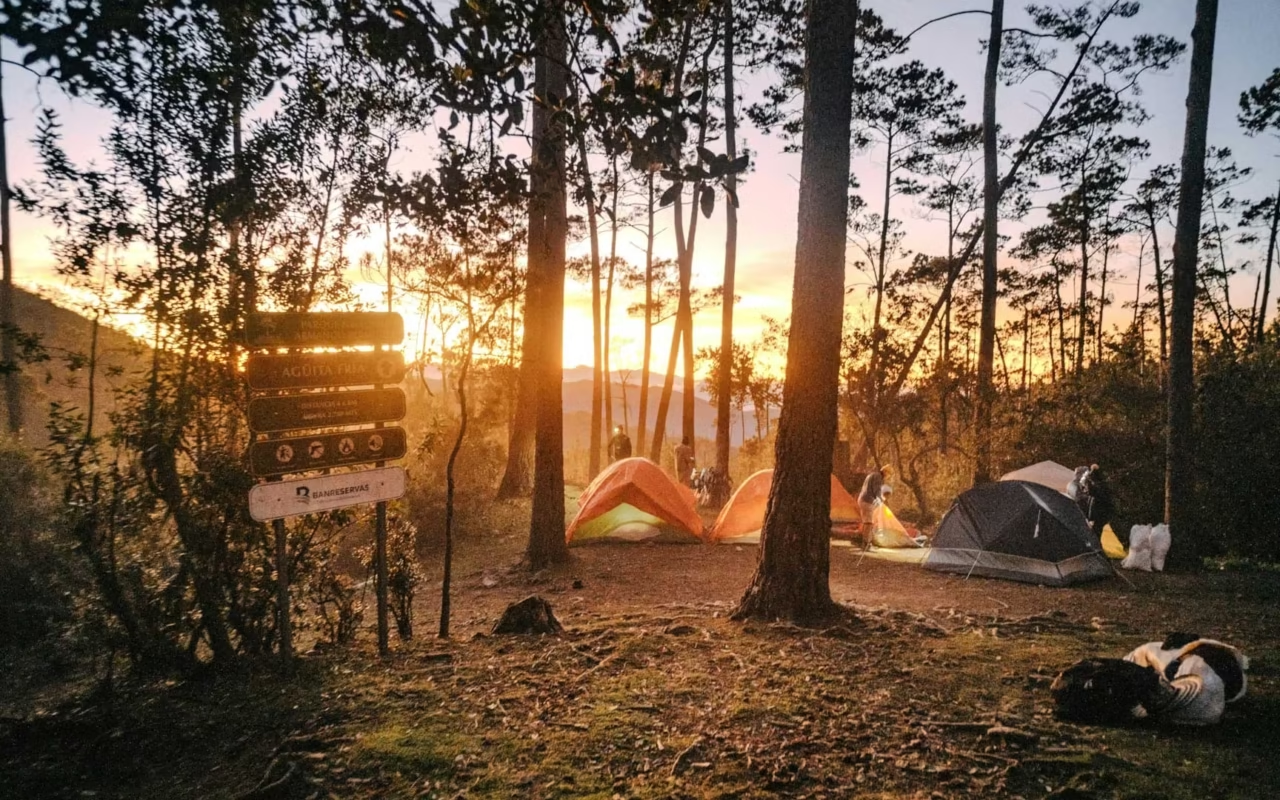
Cell phone coverage is spotty in the El Valle valley and on the trails. Let your lodging know your itinerary before setting out on a long hike. For general information about the country, see our guide on safety in the Dominican Republic.
Cabo Cabrón National Park falls under Category II of Sectoral Law 202-04: off-road motorized traffic and resource extraction are prohibited there. Details on the country’s protected areas can be found in our guide to national parks.
Combine with the rest of the peninsula
Its location at the tip of the peninsula allows you to explore the area without having to change accommodations.
- Whale watching in Samaná Bay, from January through March, departing from Santa Bárbara.
- Los Haitises National Park, covering approximately 600 km² of mangroves, limestone mogotes, and caves featuring Taíno petroglyphs, with 110 recorded bird species. Contrary to what is often reported, the park is not a UNESCO World Heritage Site.
- Salto El Limón, a waterfall 40 to 50 m high depending on the source, a 2.5 km walk or horseback ride from the trailhead.
- The beaches of the Samaná Peninsula, offering a choice between the north and south coasts.
- Las Terrenas, a 1-hour-and-15-minute drive away, for a livelier stop at the end of your stay.
FAQ
How do you get to Playa Rincón from the village?
There are two options from the pier: a boat, which takes 20 to 30 minutes, or the dirt road by 4×4 or motorcycle taxi, which takes about 30 minutes. The trail gets rough after heavy rain. The boat remains the safest option during the rainy season and allows you to combine a trip to Rincón with a visit to Frontón in a single day.
Can you stay in Las Galeras without a car?
Yes. You can explore the town on foot; the beaches are accessible by boat from the dock; and motorcycle taxis serve La Playita and the trail to Rincón. A vehicle is still useful for getting to the El Valle area and for heading back to Las Terrenas or El Catey Airport.
When is the best time to see whales from the Samaná Peninsula?
From January to March. Humpback whales breed and give birth in Samaná Bay during these three months. Tours depart from Santa Bárbara de Samaná, a 35- to 40-minute drive away. Outside of this window, whale watching isn’t possible in the bay.
How many nights should you plan to stay?
Three to five nights for both villages; a minimum of two nights in each if you’re splitting your stay. If you stay fewer than two nights, the drive there will take up too much of your time, and boat trips depend on the sea conditions on any given day.
What is there to do in El Valle with children?
The freshwater lagoon formed by the river west of the beach is ideal for swimming, with no current. The zip line through the canopy is open to families, and the hike to the nearby waterfalls can be done on horseback. The beach itself is exposed to swells.
The Samaná Peninsula is worth the effort: a one-of-a-kind road, beaches you can only reach by boat or on foot, and villages that close early. That’s also what keeps it unspoiled. Three to five nights in Las Galeras and El Valle give you plenty of time to explore the beaches of Cabo Cabrón Park, go diving, and head out to the rest of the peninsula at a leisurely pace.
Updated: August 15, 2026
About the Author
Laura Grenouillet is the founder of Terra Dominicana, which specializes in nature-based and sustainable itineraries in the Dominican Republic. She has explored Las Galeras and El Valle on numerous occasions, with a particular focus on eco-lodges, secluded beaches, and off-the-beaten-path experiences.
Every year, she helps numerous travelers create customized trips, prioritizing a sustainable and responsible approach.
Sources
- Ministry of the Environment and Natural Resources, Sectoral Law 202-04 on Protected Areas, and Decree 233 of 1996 establishing Cabo Cabrón National Park
- International Whaling Commission, Samaná Bay Marine Mammal Sanctuary
- Ministry of Tourism of the Dominican Republic, 2026
- Terra Dominicana field surveys, 2025