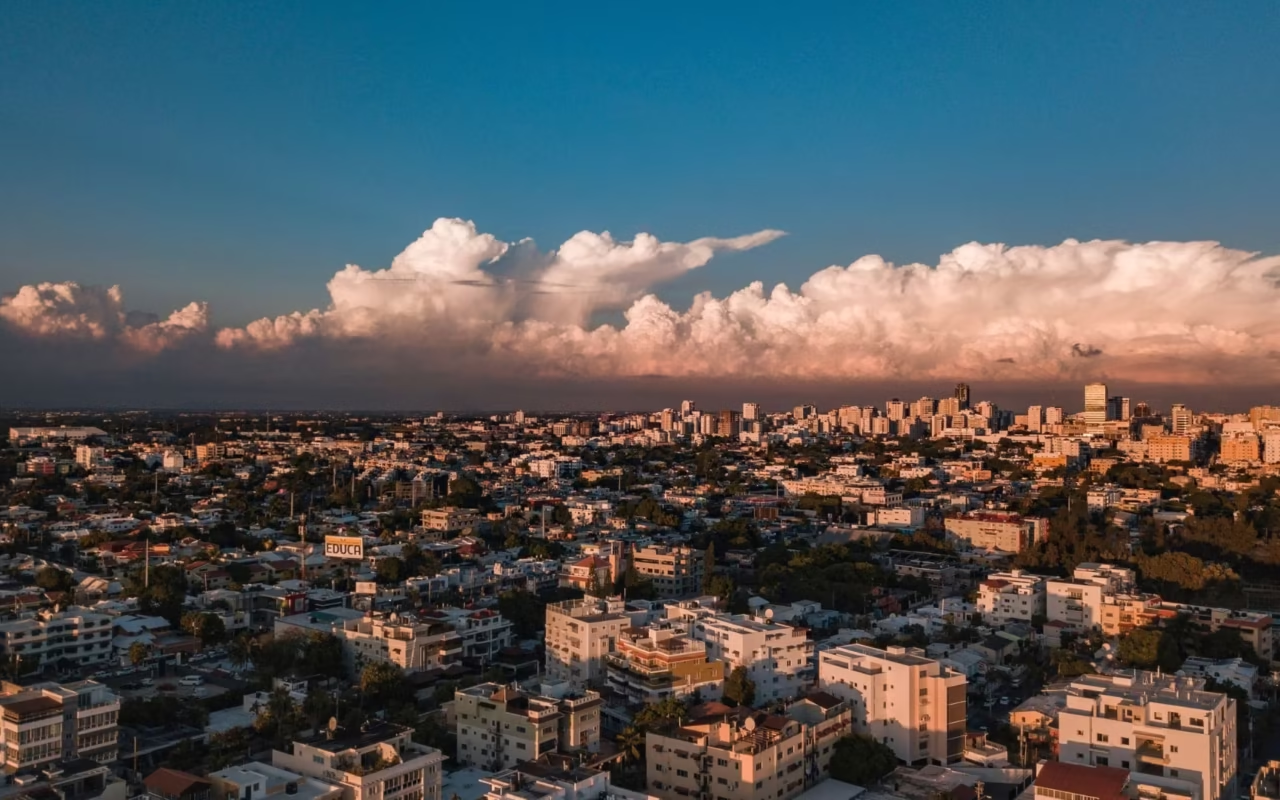
The capital of the Dominican Republic is Santo Domingo, known as Saint-Domingue in French. Founded in 1498 at the mouth of the Ozama River, it is home to the first cathedral, the first hospital, and the first university in the Americas. Its historic center, the Ciudad Colonial, has been a UNESCO World Heritage Site since 1990 and covers 106 hectares. Allow two days to explore it on foot.
The First City of the New World
Santo Domingo is considered the first European city in the New World. Founded in the late 15th century, it quickly became the political, religious, and administrative center of Spanish colonization in the Americas. Its history blends Taíno heritage, European conquest, the colonial era, French influences, and the birth of the Dominican Republic.
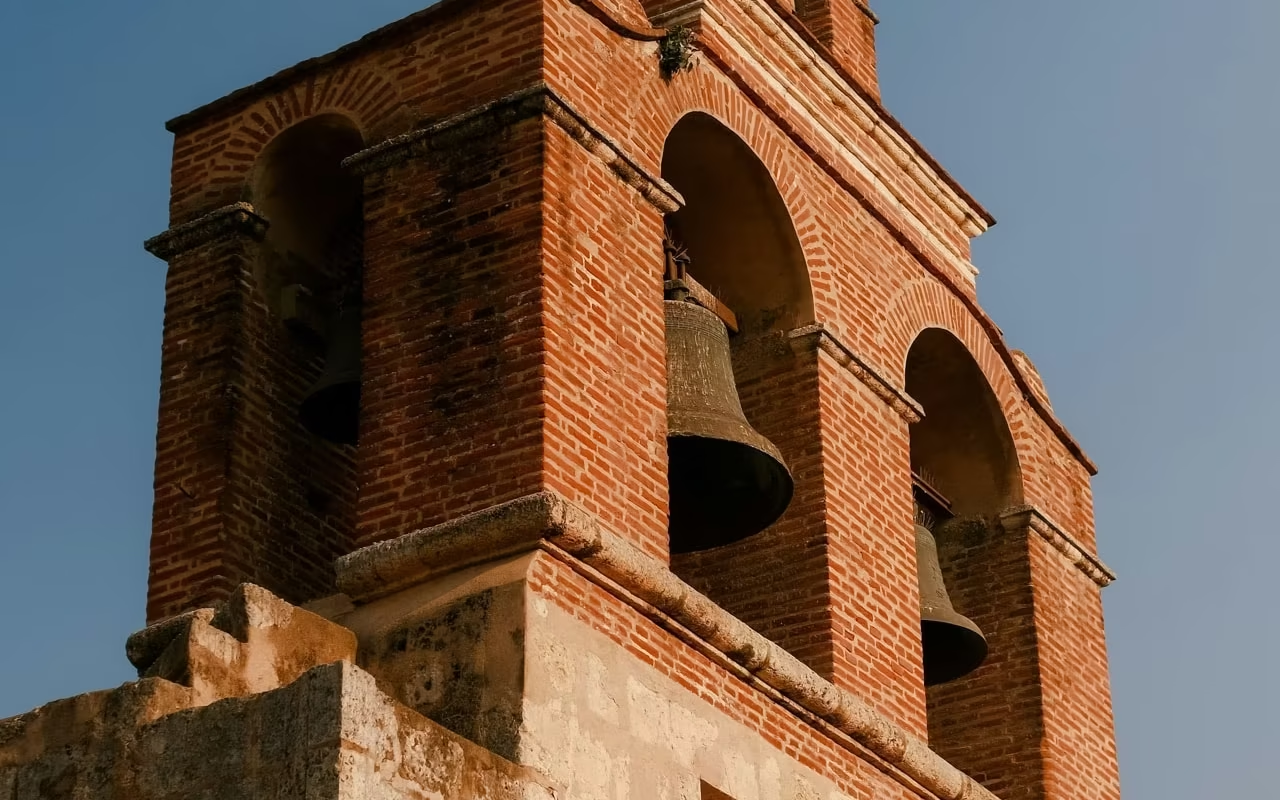
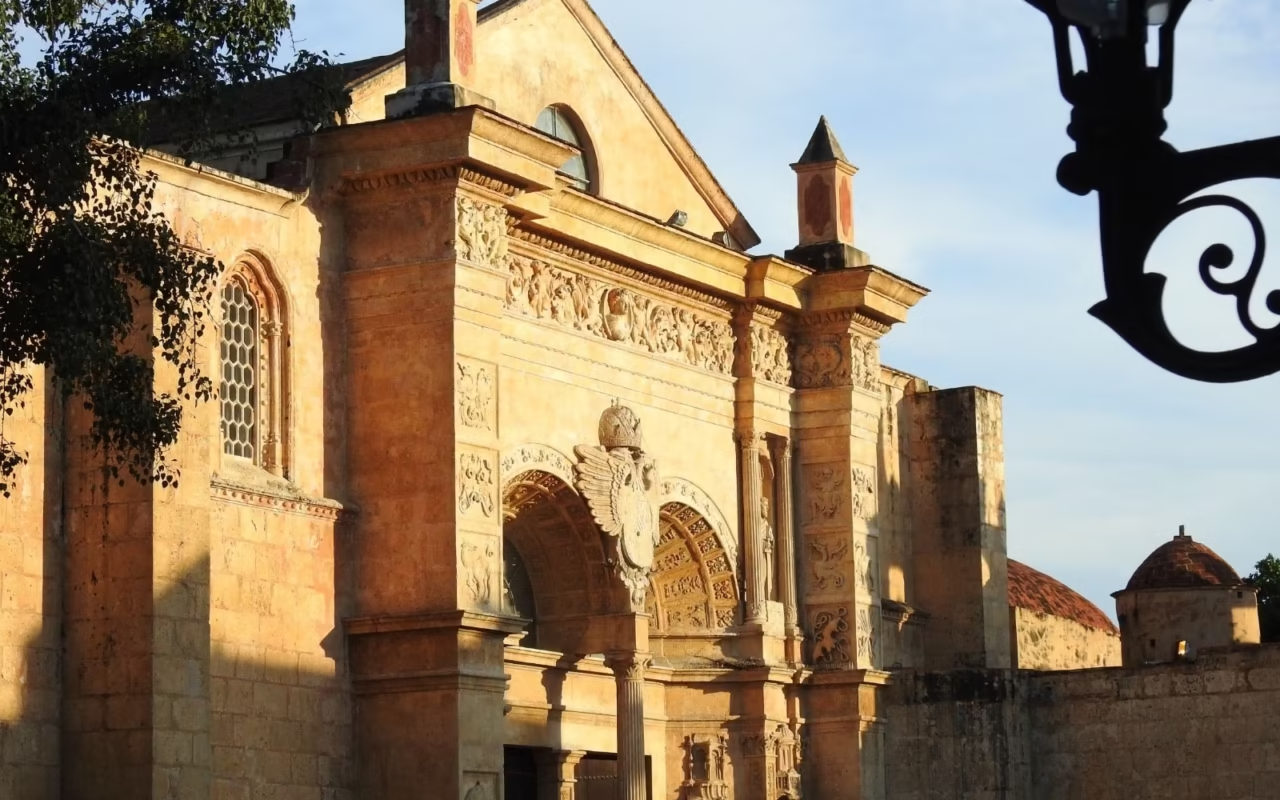
Santo Domingo or Saint-Domingue: What are we talking about?
A single name refers to four different things, and confusion is common in search engines. Here’s how to tell them apart.
- The city: Santo Domingo, Santo Domingo de Guzmán, the country’s capital and the subject of this page.
- The Spanish colony: the Captaincy General of Saint-Domingue, which covered the eastern part of Hispaniola and became the Dominican Republic.
- The French colony: Starting in 1659, Saint-Domingue also referred to the western part of the island, which became Haiti in 1804. This is the meaning used in most French history texts.
- The island: Hispaniola, which is now divided between the Dominican Republic and Haiti.
One final point: Dominica is a separate country, located further south in the Lesser Antilles. It has no administrative ties to the Dominican Republic. For a comprehensive account of the nation’s history, see our history of the Dominican Republic, from the Taíno people to the modern nation.
Before the City of Santo Domingo: Taíno Territory
Long before the arrival of Europeans, the site of present-day Santo Domingo was inhabited by Taíno yucayeques—villages organized and led by caciques or cacicas.
These communities lived off agriculture, fishing, and local trade, long before the island became a strategic asset for Europe.
1492–1493: The First European Contacts
On his first voyage, Christopher Columbus reached the New World on October 12, 1492, landing on an island in the Bahamas that he named San Salvador. A few weeks later, the caravel Santa María ran aground on the northern coast of the island of Hispaniola. Using its wreckage, Columbus founded Fuerte Navidad, the first European settlement, where he left 39 men before returning to Spain.
Upon his return in 1493, during his second expedition (17 ships, 1,500 men), Columbus found the fort destroyed and its occupants dead.
La Isabela: First Spanish City (1493)
To avoid further conflicts with the Taínos, Columbus founded a new colony further east on the northern coast: La Isabela, named in honor of Queen Isabella of Castile.
Featuring stone buildings, a church, and a hospital, La Isabela is considered the first Spanish city in the New World, but it was quickly abandoned due to harsh conditions.
The site of La Isabela can be visited today in the national park of the same name, near Punta Rucia and Montecristi, on the northern coast.
1496–1498: Founding of Santo Domingo
In 1496, Columbus returned to Spain and entrusted the governance of the island to his brother Bartolomé Colón.
While exploring the southern part of the island, Bartolomé founded a new settlement on August 5, 1496, at the mouth of the Ozama River: La Nueva Isabela, which would soon be renamed Santo Domingo.
After its destruction by a hurricane in 1502, the city was rebuilt on the opposite bank of the river by the new governor, Nicolás de Ovando.
A Model Capital of Colonization
Under the governorship of Nicolás de Ovando and then Diego Colón, son of Christopher Columbus, Santo Domingo experienced rapid growth.
Rebuilt according to Renaissance urban principles, it became the model for cities founded later in the Caribbean and on the American continent.
It was during this period that the major buildings were constructed, which still define the layout of the Ciudad Colonial today.
A Religious, Intellectual, and Administrative City
Santo Domingo quickly became a major religious and intellectual center. The Dominican, Franciscan, and Jesuit orders founded churches, convents, and educational institutions.
In 1538, the University of Santo Tomás de Aquino was founded—the first university in the Americas—confirming the city’s central role in the Spanish colonial world.
French influences and urban transformations
In 1795, under the Treaty of Basel, Spain ceded the island to France. This period introduced new architectural influences—more open facades, balconies, and large windows—that set Santo Domingo apart from other Caribbean cities.
From the Republic to the Modern City
After the Dominican Republic declared independence in 1844, the city entered a phase of Creole transformation. In the early 20th century, concrete construction proliferated, often outside the city walls, giving rise to the modern city and new neighborhoods.
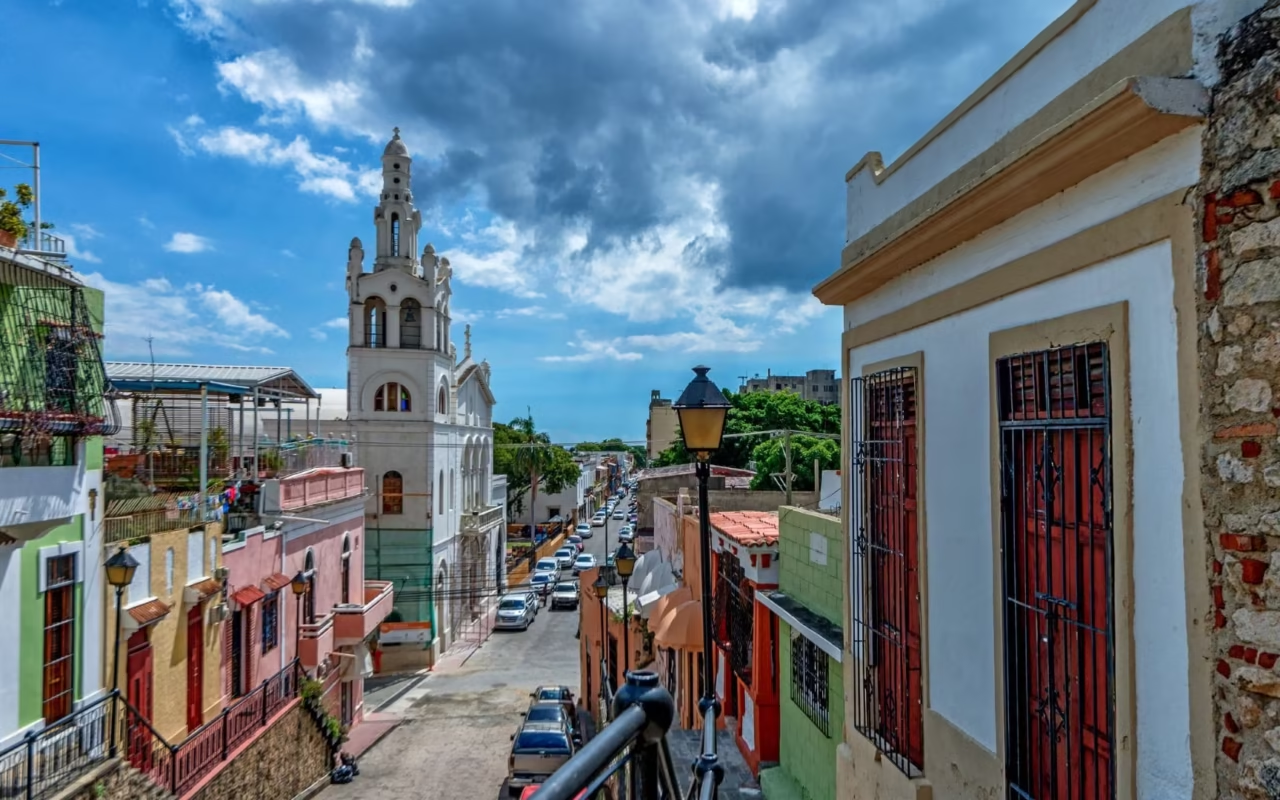
Important Dates in the History of Santo Domingo
Sources differ on the year of foundation: 1496 or 1498. Both dates are correct and refer to two distinct stages, which the UNESCO nomination file clearly distinguishes.
| Date | Event |
|---|---|
| October 12, 1492 | Christopher Columbus reaches the New World, then sails along the coast of Hispaniola |
| 1496 | First settlement on the eastern bank of the Ozama River |
| 1498 | Founded by Bartolomé Colón, on the orders of the Catholic Monarchs |
| 1502 | Governor Nicolás de Ovando moves the city to the west bank and imposes a grid-like layout |
| 1538 | Establishment of the University of Santo Tomás de Aquino, the first in the Americas |
| 1795 | Treaty of Basel: Spain cedes the eastern part of the island to France |
| February 27, 1844 | Proclamation of Dominican independence at the Puerta del Conde |
| 1990 | The Colonial City is designated a UNESCO World Heritage Site |
| 2024 | Minor modification of the property’s boundaries |
Source: UNESCO, Nomination File No. 526, Criteria ii, iv, and vi.
Santo Domingo Today
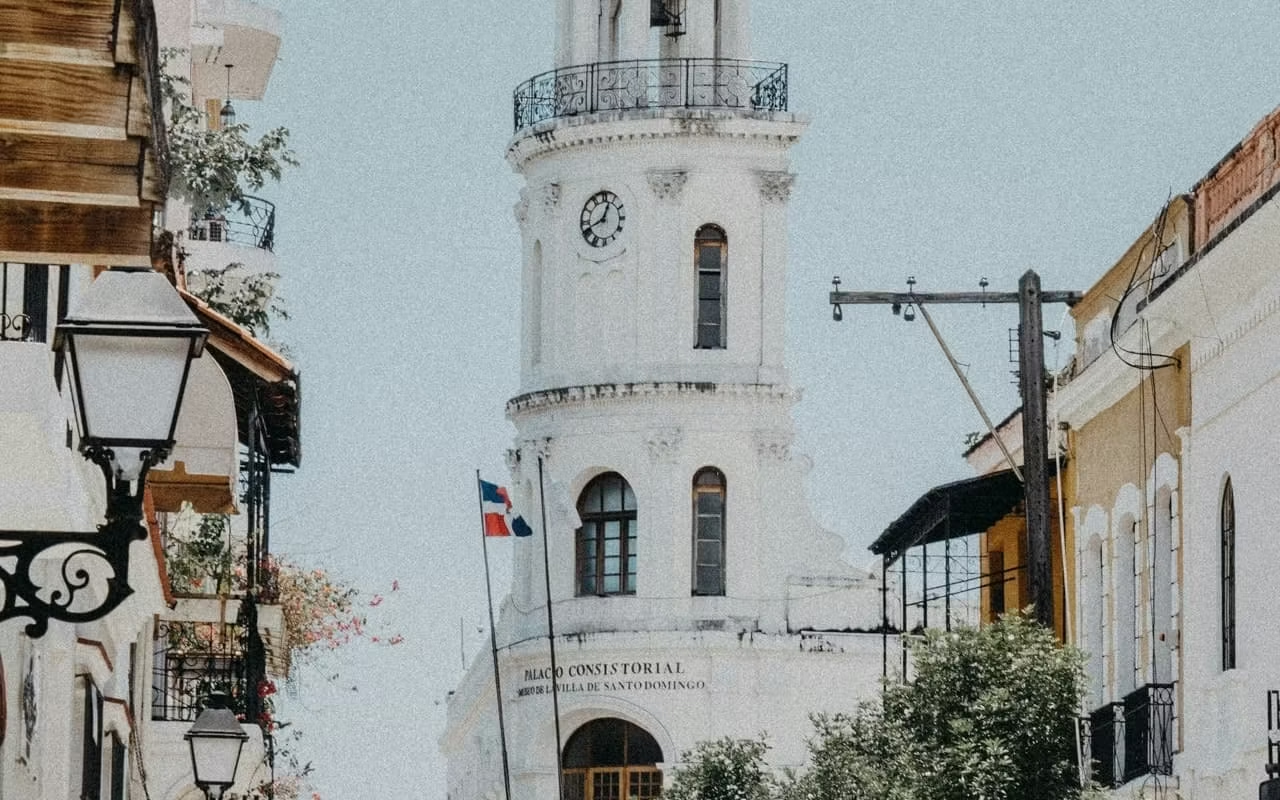
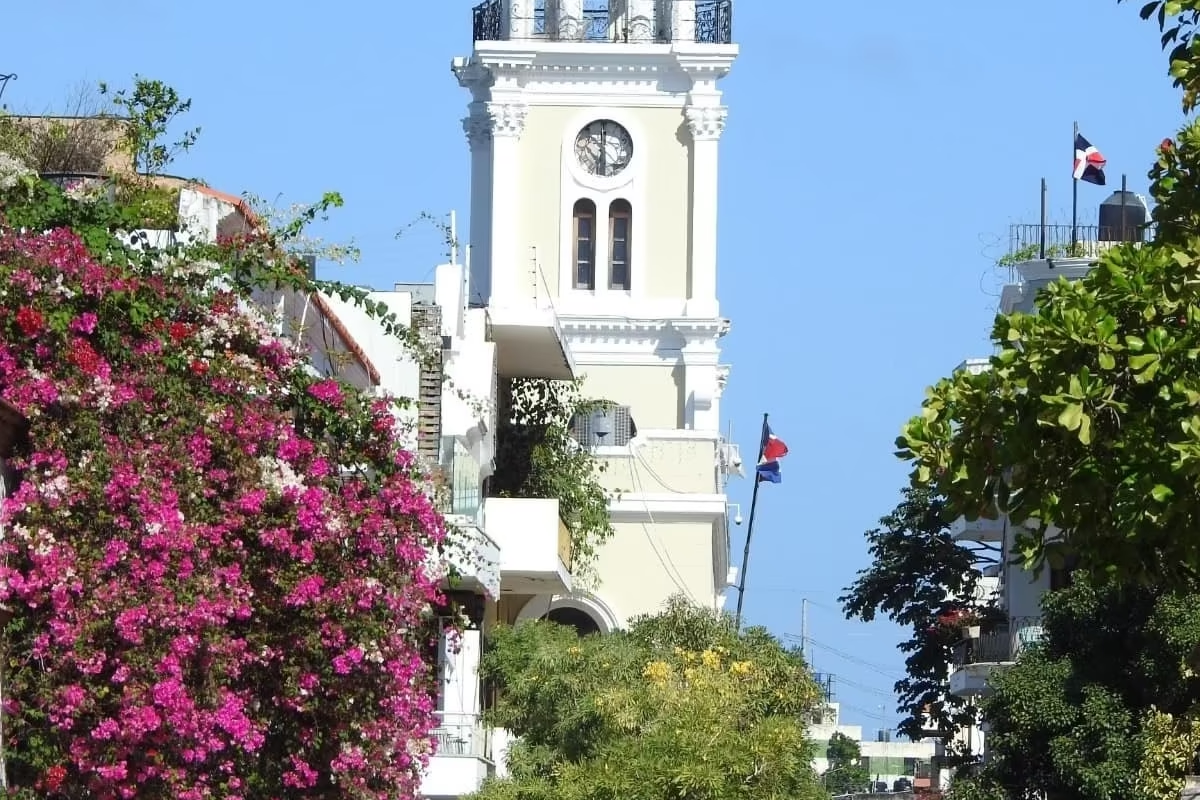
In the 21st century, Santo Domingo is both a place that shaped American history and a vibrant, dynamic, and culturally rich capital. The Ciudad Colonial, or Colonial Zone, designated a UNESCO World Heritage Site in 1990, is currently undergoing major restoration projects to preserve a unique heritage spanning more than five centuries of history.
The inscribed site covers 106 hectares, 32 streets, and 116 city blocks, surrounded by a 465-hectare buffer zone. The boundaries underwent a minor modification in 2024. It is the only inhabited urban center that still retains its 15th-century street layout.
The city is best explored on foot, starting from Parque Colón. To plan a visit, see what to do in Santo Domingo and our guide to art, culture, and heritage.
Frequently Asked Questions About the Dominican Capital
What is the capital of the Dominican Republic?
Santo Domingo, or Santo Domingo de Guzmán in Spanish. It is located on the southern coast of Hispaniola, at the mouth of the Ozama River, and forms the National District. It is the seat of government, the first European city founded in the Americas, and the main air gateway to the southern part of the country.
Was Santo Domingo founded in 1496 or 1498?
Both dates are correct. An initial settlement was established on the eastern bank of the Ozama River in 1496. The formal founding by Bartolomé Colón, on the orders of the Catholic Monarchs, took place in 1498. In 1502, Governor Nicolás de Ovando moved the city to the opposite bank following a hurricane.
Why is it called both Saint-Domingue and Santo Domingo?
Santo Domingo is the Spanish name; Saint-Domingue is its French translation. In French, the word also refers to the French colony that became Haiti, which explains the confusion in historical texts. The context makes it clear: when we speak of the Dominican capital, we are referring to the city.
What remains of the colonial city today?
The Ciudad Colonial retains its original grid layout, ramparts, and forts across 106 hectares. Visitors can explore the Santa María de la Encarnación Cathedral, the Alcázar de Colón, the Ozama Fortress, and the Calle de las Damas. The neighborhood remains inhabited and is the focus of a municipal revitalization plan.
How much time should you allow to visit Santo Domingo?
Two days are enough to see the Colonial City and the main museums. Add half a day for Los Tres Ojos and the Faro a Colón, located east of the river. Beyond that, the city serves as a starting point for trips to the southeast coast or the Central Mountain Range.
About the Author
Laura Grenouillet has been the founder and travel consultant at Terra Dominicana since 2026.
After more than seven years living and working in the Caribbean, she has now settled in Santo Domingo, where she lives and designs custom itineraries that blend history, culture, and encounters with locals.
Sources
- General Archive of the Dominican Republic, 2026
- UNESCO, Colonial City of Santo Domingo (1990, file no. 526), 2026
- Go Dominican Republic, 2026