At a Glance
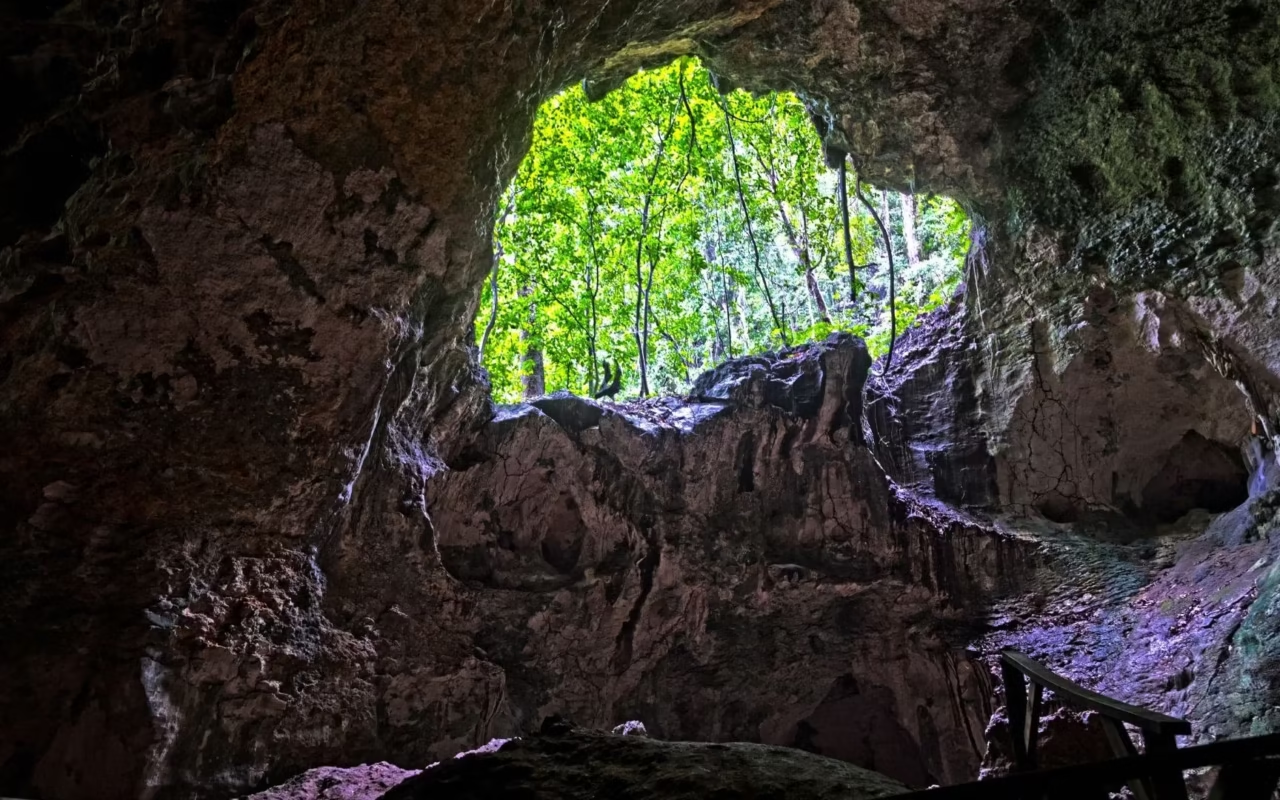
The Dominican Republic is home to more than 450 documented caves and boasts the largest network of karst cavities in the Caribbean. Many were used by the Taíno, the island’s first Indigenous inhabitants, as shelters and ceremonial sites. From Los Tres Ojos in Santo Domingo to the Cueva de las Maravillas, the caves of Cotubanamá National Park, and the freshwater cenotes scattered across the island, these sites reveal a profound aspect of Hispaniola’s heritage.
The Taíno and the Caves: An Underground Legacy
Long before the arrival of Europeans, the island of Quisqueya was inhabited by the Taínos, an Indigenous people belonging to the Arawak language group, originally from northern South America. Having arrived in the Caribbean around 800 BCE, they left a profound mark on the Dominican landscape—particularly through the caves they used as shelters, ceremonial spaces, and spiritual sites.
The walls of these caves still bear petroglyphs (engravings in the rock) and pictograms (charcoal drawings), depicting animal and human figures as well as symbols related to their cosmology. Rituals were led by the bohiques, the community’s healers, who would seclude themselves there to perform their medical-magical practices.
Ceramic, stone, and shell objects have also been found at several sites. It is estimated that there were between 200,000 and 300,000 Taínos on the island before Spanish colonization—a population that had virtually disappeared within less than a century after the arrival of the Europeans in 1492.
Did you know? The term “Taíno” means “good” or “noble” in their language. Recent genetic studies have shown that 15% of the genetic heritage of today’s Dominicans is of Taíno origin—a tangible trace of a civilization often mistakenly portrayed as having completely disappeared.
Taíno Caves to Visit in the Dominican Republic
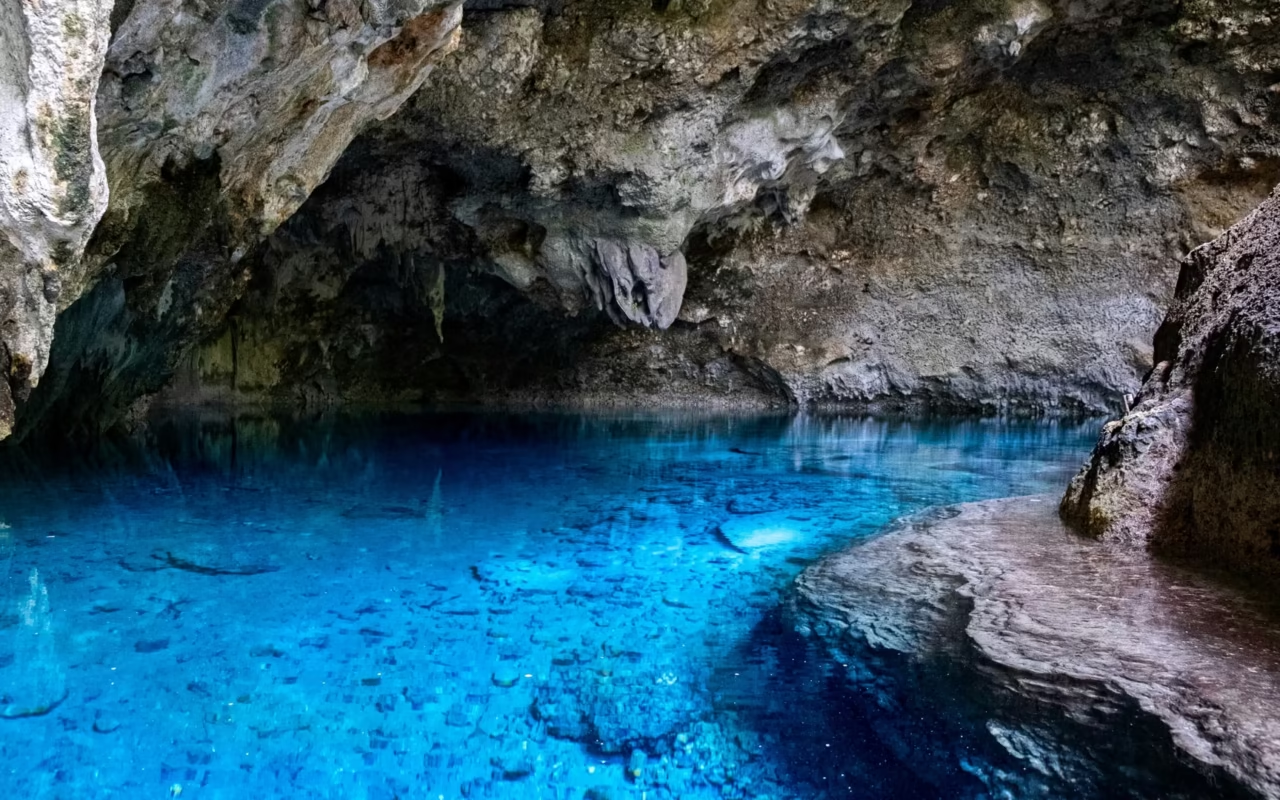
1. Los Tres Ojos National Park — Santo Domingo
Located east of the capital, in Mirador del Este Park, Los Tres Ojos National Park is one of the most accessible underground sites in the country. Despite its name (“The Three Eyes”), it actually consists of four freshwater lagoons connected by underground tunnels, formed thousands of years ago by tectonic fractures.
The three main lakes each have a name:
- Lago de Azufre — green-blue reflections caused by the presence of minerals
- La Nevera — the coldest, between 15 and 21°C, with no direct exposure to sunlight
- El Lago de las Damas — the brightest, accessible from the outside
A fourth lake, Los Zaramagullones, is accessible only by boat—the boat ride through the caves is one of the highlights of the visit. The Taínos used these lakes as drinking water reservoirs and left petroglyphs on the cave walls.
Our tip: Visit with a local guide to understand the site’s historical context. The park is about 15 minutes from the Colonial Zone.
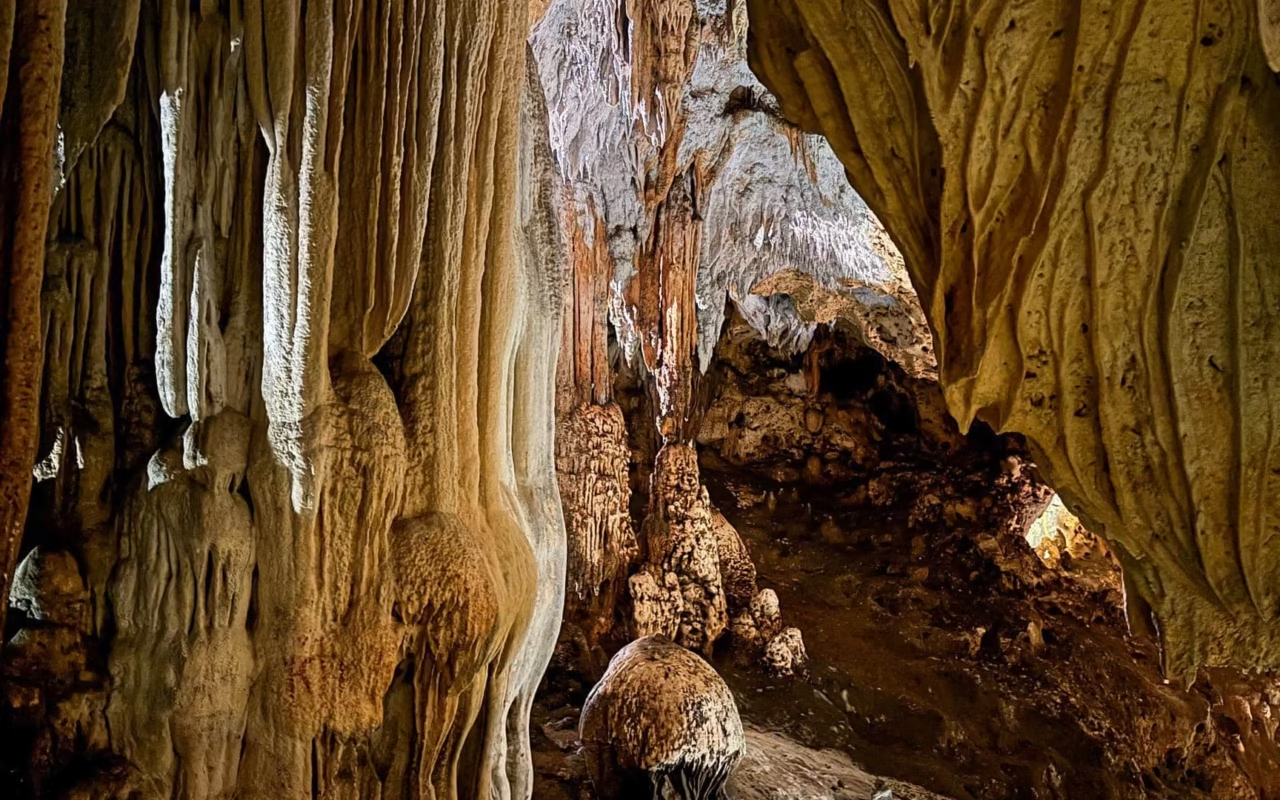
2. Cueva de las Maravillas — The best-developed cave in the country
Located on the road between San Pedro de Macorís and La Romana, the Cueva de las Maravillas (“Cave of Wonders”) is the most accessible and best-documented cave in the Dominican Republic. Rediscovered in 1926, it was opened to the public in 2003. The site is home to more than 500 Taíno petroglyphs and pictograms preserved 25 meters underground—one of the most significant collections of pre-Columbian rock art in the Caribbean. Archaeological excavations have uncovered human remains dating back 4,000 to 5,000 years.
The visit is well-supervised and perfectly organized: a 45-minute guided tour along approximately 800 meters of secure walkways, subtle lighting, easy access via ramps and an elevator (wheelchair-accessible), and a museum at the entrance dedicated to Taíno culture. Ideal for families and easily combined with a visit to Bayahibe or Punta Cana.
Important: Photography and touching the rock walls are prohibited inside the site to protect the rock art.
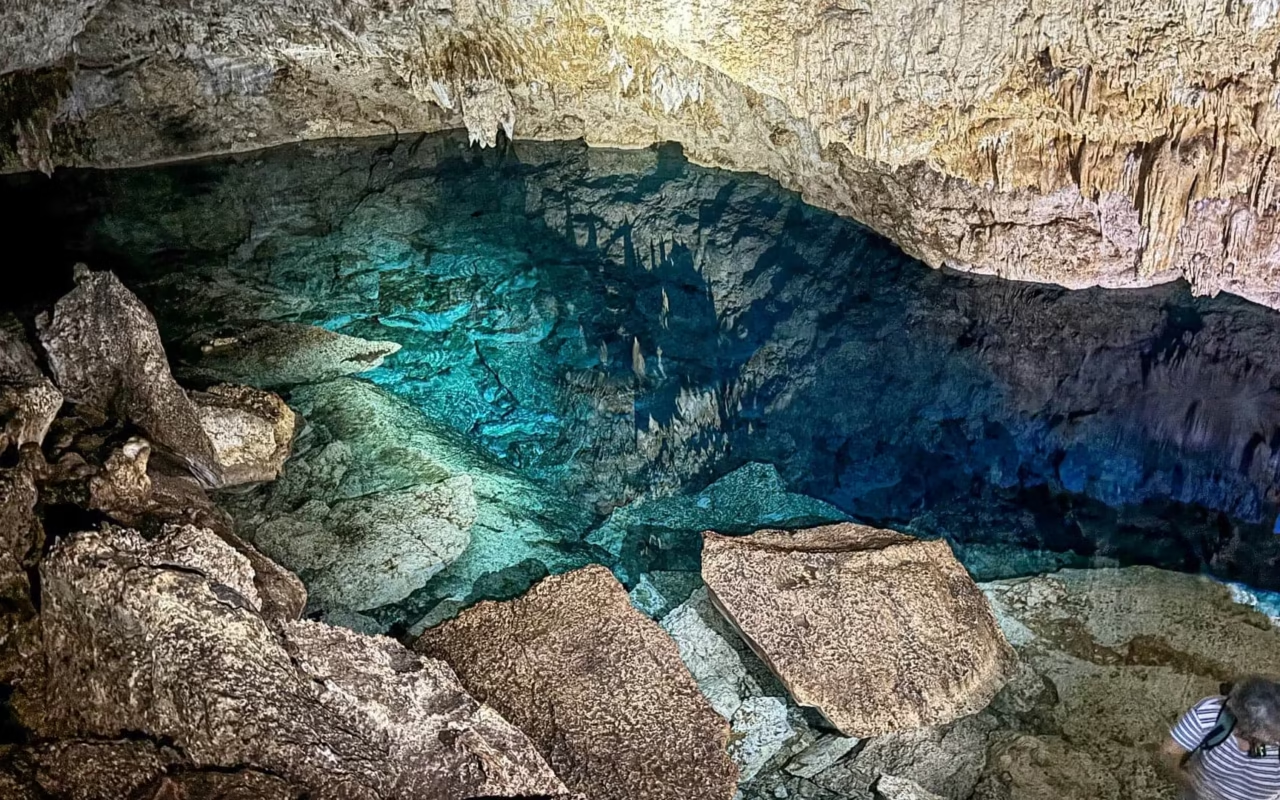
3. The Caves of Cotubanamá National Park
Located about an hour from Punta Cana, Cotubanamá National Park is home to several caves of great archaeological significance. Among the most well-documented sites are:
- Cueva del Puente — remarkable limestone formations and Taíno petroglyphs
- Cueva de José María and Cueva de Panchito — rich in pictographs
- Sendero Padre Nuestro — a guided trail through the park’s rainforest
- Manantial de Chicho — a unique combination of a cave and a freshwater pool
These sites can be visited with a specialized guide, who is essential for understanding the historical and cultural significance of the locations.
Diving Tour in the Dominican Republic: private or small-group tours
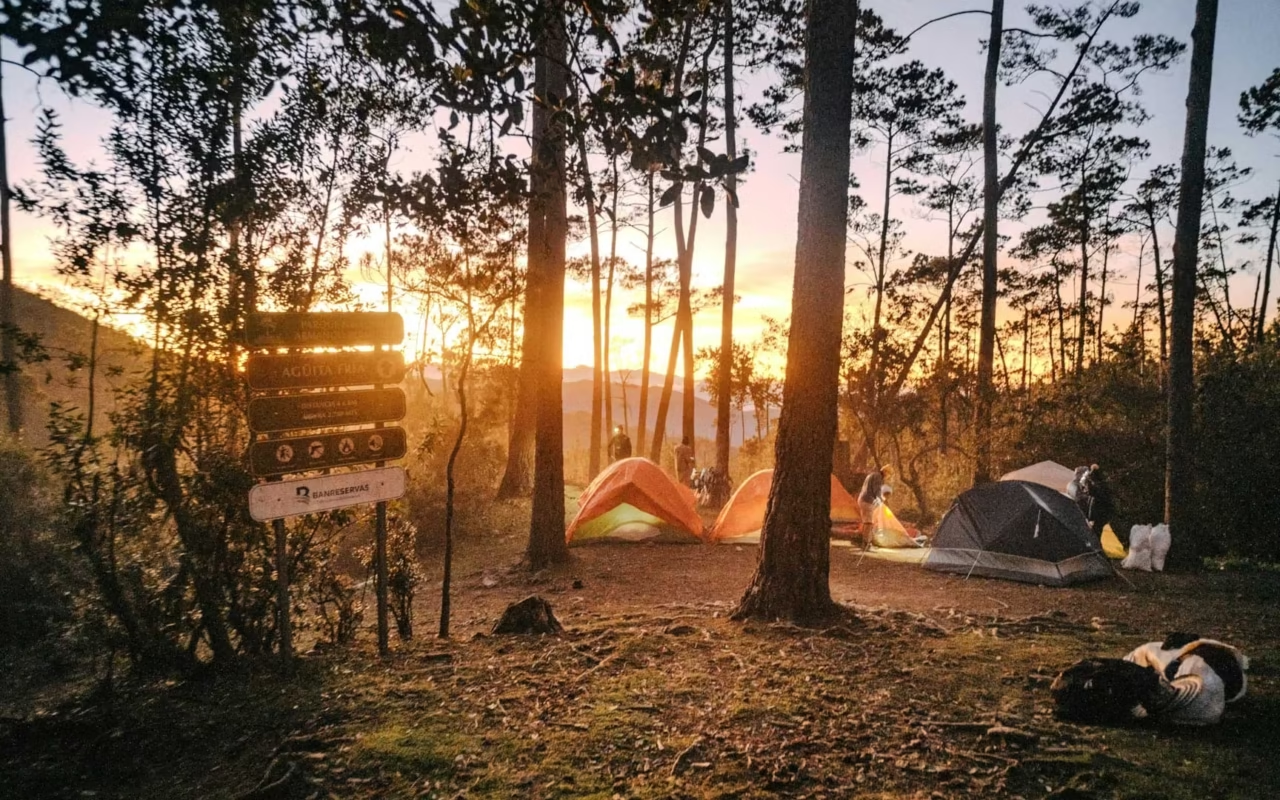
Adventure Trip to the Dominican Republic & Climb of Pico Duarte

Dominican cenotes:
freshwater pools carved into the rock
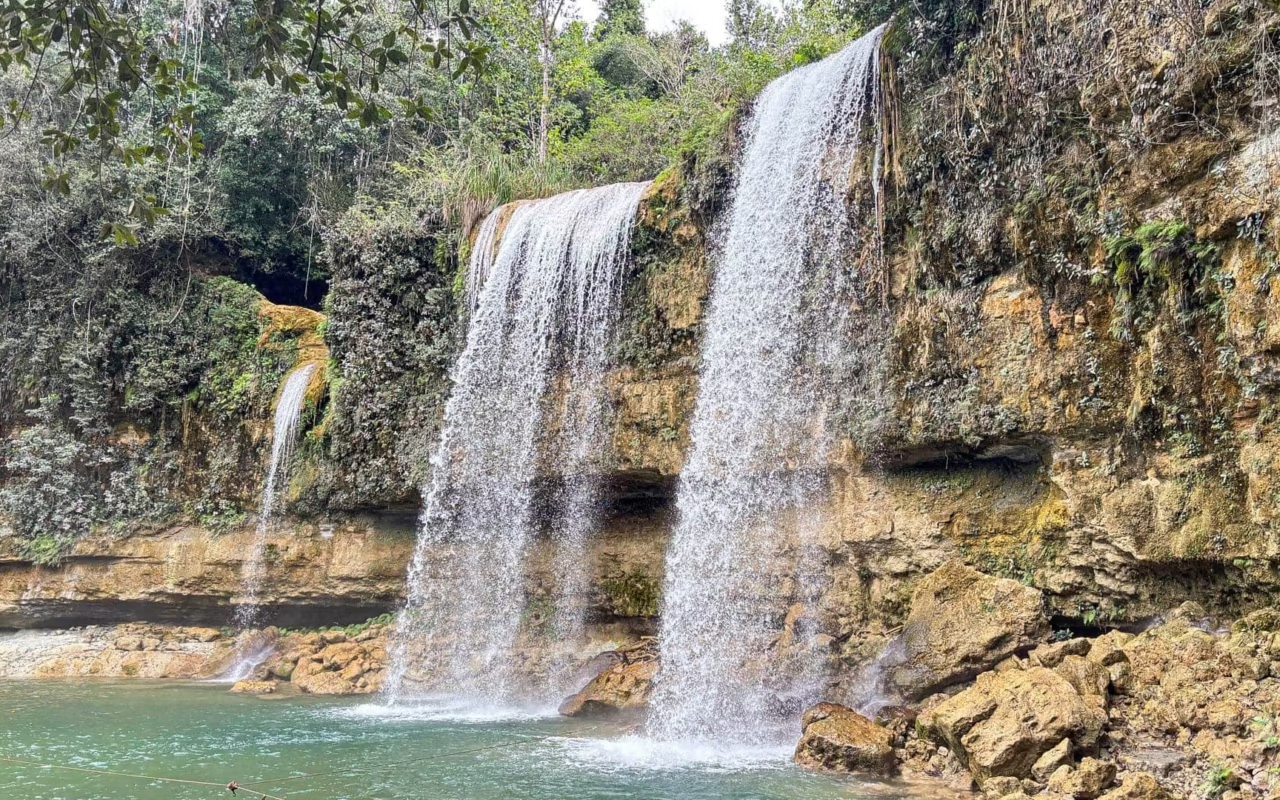
The Dominican Republic is also home to cenotes—natural freshwater pools formed in limestone, often connected to underground rivers. These cavities offer crystal-clear water at stable temperatures, set against a striking backdrop of rock formations or forest.
Hoyo Azul — Cap Cana
Hoyo Azul is a natural pool of vivid turquoise water, nestled at the bottom of a rocky cavity surrounded by vegetation. Swimming is possible here and offers a refreshing experience after the hike through the forest to reach it. It is part of the Cap Cana resort and can easily be combined with other activities in the Punta Cana area.
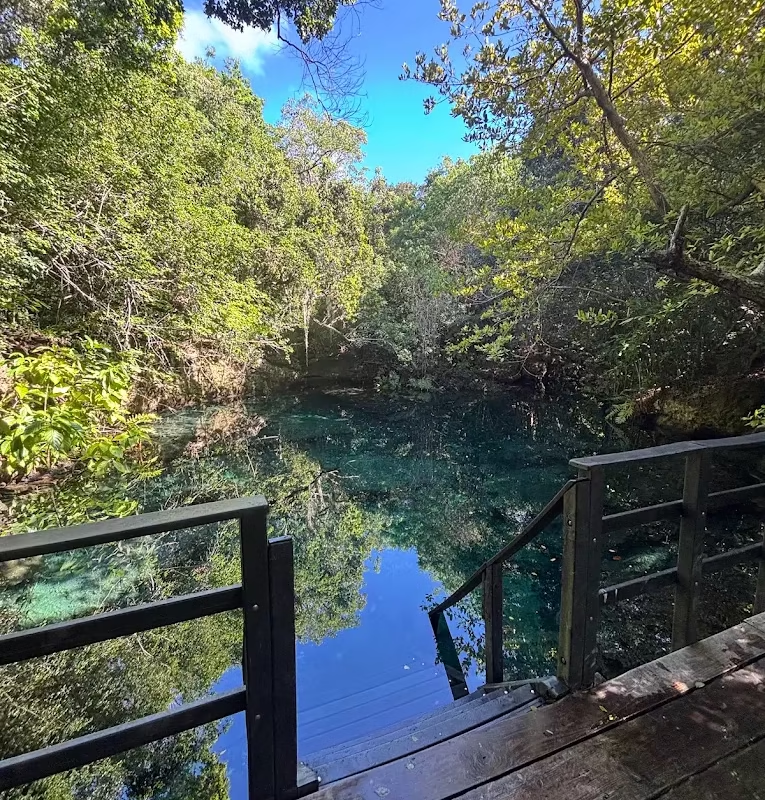
Ojos Indígenas Ecological Reserve — Punta Cana
This ecological reserve protects several freshwater lagoons fed by underground rivers, surrounded by a preserved tropical forest. Marked trails connect the various lagoons, some of which are open for swimming. The setting is peaceful and secluded—we highly recommend it for a true immersion in nature, far from the bustling beaches of Punta Cana.
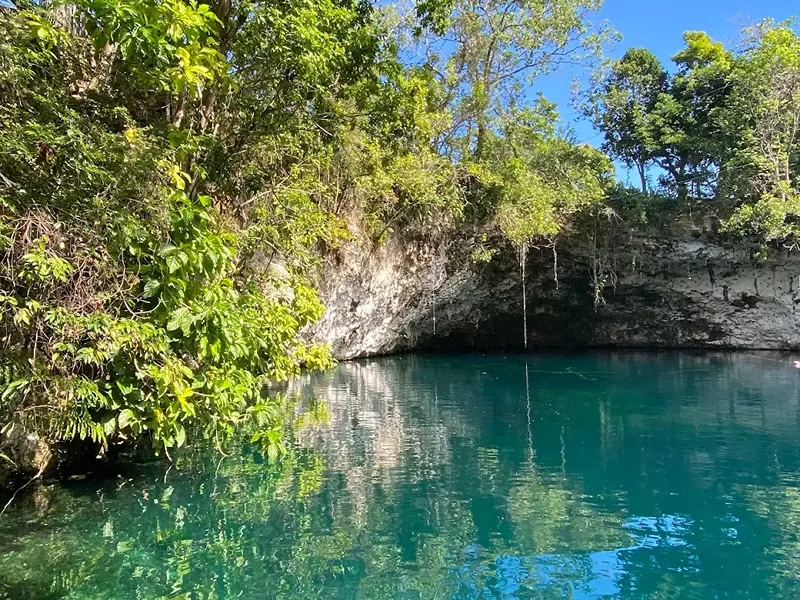
Laguna Dudu — North Coast
Near Nagua, Laguna Dudu features two interconnected freshwater lagoons, a zip line, and a natural setting that remains well-preserved despite the site’s development. It’s an ideal stop on the north coast, especially when combined with a visit to Cabrera or Río San Juan.
Lago Azul — Cabrera
A small, semi-cave-like pool near Cabrera, Lago Azul features deep blue water with a constant temperature of around 23°C. Its rocky surroundings and low number of visitors make it a more intimate stop along a route along the north coast.
Visiting Caves and Cenotes Safely
Developed tourist sites (Cueva de las Maravillas, Los Tres Ojos, Laguna Dudu) have staff on site and appropriate equipment. For less well-marked sites, here are a few essential rules:
- Wear closed-toe shoes with non-slip soles
- Never touch the geological formations—human contact interrupts their millennia-long growth
- Stay within the marked areas and follow the guides’ instructions
- Bring a headlamp for unlit caves
Guided tourism at these sites directly contributes to their conservation—admission fees often fund conservation programs and involve local communities.
Frequently Asked Questions
What is the difference between a cave and a cenote?
A cave is an underground cavity carved into the rock by erosion. A cenote is a natural freshwater well or pool formed in the same limestone, usually connected to a network of underground rivers. In the Dominican Republic, both terms are often found at the same site.
Can you swim in all cenotes?
No. Some sites are accessible only on foot for conservation or safety reasons. Others allow swimming under certain conditions—it’s always best to check on-site before entering the water.
Are the caves suitable for children?
The Cueva de las Maravillas and Los Tres Ojos are perfectly suited for families, with accessible trails and educational exhibits. For more natural sites (Cotubanamá, less developed caves), a certain level of physical fitness is recommended.
Do I need to book in advance?
Recommended for protected sites and ecological reserves, especially during peak season (December–April). Required if you wish to be accompanied by a local English-speaking guide.
Conclusion
Exploring the caves and cenotes of the Dominican Republic allows you to discover a deeper side of the country—its pre-Columbian history, its karst geology, and its unspoiled natural environment. These sites reveal the Taíno heritage far better than any museum exhibit. At Terra Dominicana, we include relevant stops in your travel itinerary based on your route —and when a guided tour is recommended, we book the guides and integrate the experience directly into your itinerary.
About the Author
Laura Grenouillet is the founder of Terra Dominicana. Based in Santo Domingo, she pays special attention to sites linked to Taíno history, caves, cenotes, and protected areas that reveal a deeper dimension of the country.
Sources
- Visit Dominican Republic — Cueva de las Maravillas and Hoyo Azul
- Ministry of the Environment and Natural Resources — Cotubanamá National Park
- Field data from Terra Dominicana, 2025–2026