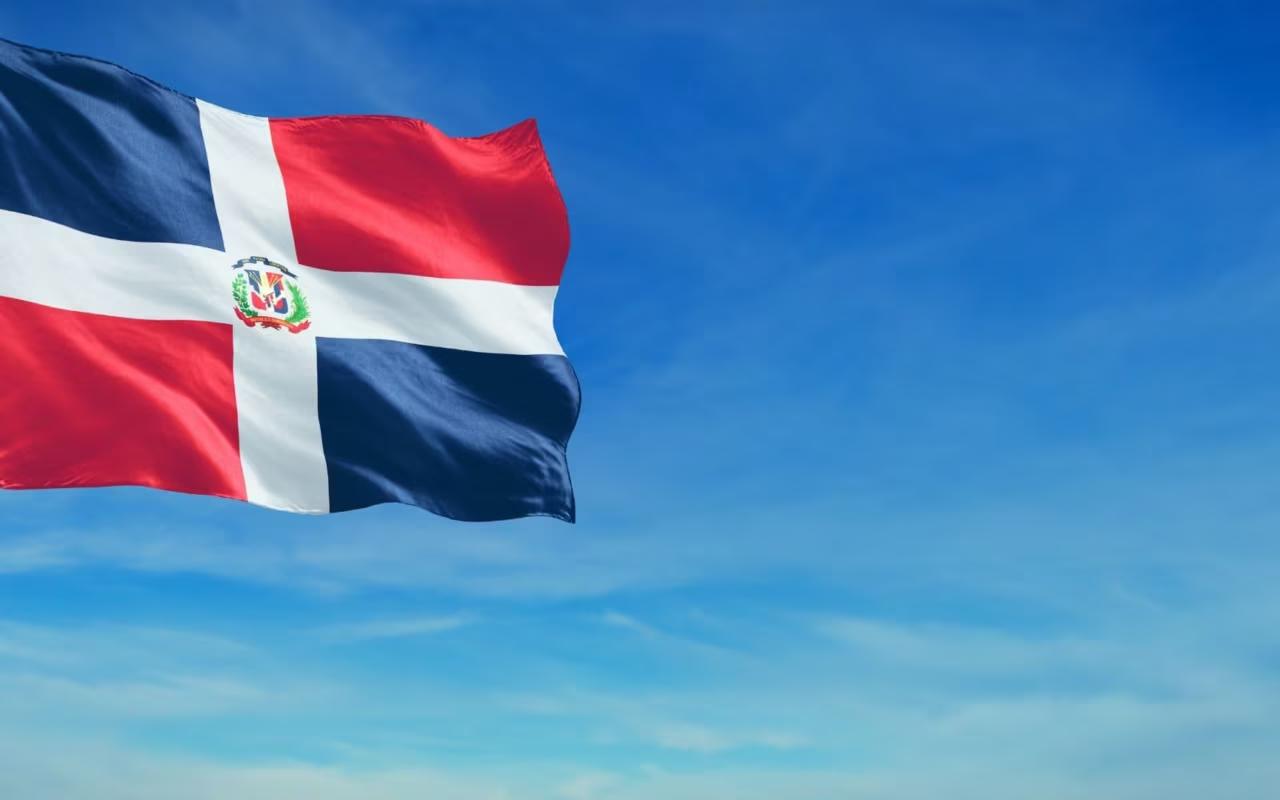
The Dominican Republic is the second-largest country in the Caribbean after Cuba, both in terms of land area (48,442 km²) and population (approximately 11 million people). Located on the eastern part of the island of Hispaniola, it shares a border with Haiti to the west and is bordered by the Atlantic Ocean to the north and the Caribbean Sea to the south.
Before you travel, check out our practical guides: available flights, travel budget, best times to visit, and entry requirements. To understand the spirit of the country, be sure to read our article onthe history of the Dominican Republic.
Dominican Republic ID Card
| Indicator | Information |
|---|---|
| Official Name | Dominican Republic |
| Capital | Santo Domingo |
| Area | 48,442 km² |
| Population | ~11 million people |
| Population Density | 74 people/km² |
| Location | Eastern part of the island of Hispaniola (Caribbean) |
| National Holiday | February 27 (Independence Day, 1844) |
| Official language | Spanish |
| Main religion | Catholicism (~60%) + Protestantism (~25%) |
| Currency | Dominican peso (DOP) |
| Political system | Democratic presidential republic |
| President (2024) | Luis Abinader (re-elected in 2024) |
| Administrative divisions | 31 provinces + 1 National District |
Population Composition
Dominican society is the result of a historical blending of Taíno, African, and European heritages. The population consists mainly of people of mixed heritage, people of African descent, people of European descent, and a minority of Asian descent (particularly Chinese). The Dominican Republic also has a significant diaspora, primarily in the United States and Spain.
Demographic indicators: median age ~28–29 years, life expectancy ~74–76 years, urban population >80%, with the population concentrated in the Santo Domingo metropolitan area, the Cibao Valley, and around Punta Cana.
Economy at a Glance
The Dominican Republic is considered one of the most dynamic economies in the Caribbean (65th largest economy in the world). Its main sectors are tourism, industrial free trade zones, construction, and remittances from the diaspora. GDP per capita: approximately €10,666 (2026). Recent inflation: ~5%.
Tourism in the Dominican Republic is a major economic pillar, attracting more than 10 million visitors annually. To estimate your travel budget, check out our travel budget guide.
Currency and Cost of Living
The official currency is the Dominican peso (DOP). The U.S. dollar is widely accepted in tourist areas. Tourist areas such as Punta Cana are generally more expensive than rural or less-visited regions.
Tipping
A 10% service charge is often included on the bill (listed as “servicio”). It is customary, though not mandatory, to add an additional 5 to 10% if you were satisfied with the service.
Regional Location and Borders
Located between Cuba and Puerto Rico, the Dominican Republic occupies a strategic position in the Caribbean. It shares the island of Hispaniola with Haiti, with which it maintains significant and complex economic ties. Two countries, one island, two distinct histories: read our article onthe history of the Dominican Republic to understand this fascinating duality.
Drinking Water
Tap water is not safe to drink in the Dominican Republic. It is recommended that you drink only bottled water, avoid ice cubes in non-tourist establishments, and use filtered water for brushing your teeth in rural areas. In tourist hotels and restaurants, the water served is generally filtered.
For all other practical information before your trip, check out our FAQ and our guide to entry requirements.
About the Author
Laura Grenouillet is the founder of Terra Dominicana, an incoming tour operator based in Santo Domingo. She designs custom itineraries that allow travelers to discover the Dominican Republic in all its diversity.