Do you dream of exploring Haiti? Discover part of its history and cultural influences in the Dominican Republic
Haiti captivates visitors with its history, Creole culture, music, and cuisine. The two countries share an island and a closely intertwined history, despite political, social, and identity-related tensions.
In 2026, the security situation makes tourist travel to Haiti impossible. However, the Dominican Republic offers the opportunity to explore certain aspects of this shared history through Haitian communities, music, dance, cuisine, and the bateyes.
The goal is to highlight what the two countries share and what sets them apart, while exploring the cultural influences and exchanges that have shaped the island.
Is it safe to travel to Haiti right now?
Travel to Haiti is currently impossible under normal security conditions. France Diplomatie strongly advises against all travel to the country due to insecurity, the presence of armed gangs, and the risk of kidnapping.
Haiti has two main international airports:
- Toussaint-Louverture Airport (PAP) in Port-au-Prince, which was historically the country’s largest and busiest,
- and Cap-Haïtien International Airport (CAP).
However, due to the current security situation, Port-au-Prince is no longer served by regular international airlines. As of now, Cap-Haïtien is therefore the main (barely) operational international gateway for travelers heading to Haiti.
The land borders between Haiti and the Dominican Republic remain closed. However, a few air routes still exist between the two countries. As for cruises, tour operators have stopped making stops in Haiti due to the lack of security.
We will keep you informed of the situation should the country stabilize and reopen its borders.
Information current as of September 2026
How can we better understand Haiti without crossing the border?
Even though it’s not possible to visit Haiti right now, we want to show you that you can still sense and experience something of the country’s spirit right here in the Dominican Republic.
A trip to the Dominican Republic allows you to discover the vibrant presence of Haitian culture on the island—through traditions, music, cuisine, cultural exchanges, and the Haitian communities living there. It’s easy to meet Haitians and interact with this charming and hardworking people.
TERRA dominicana has experienced this cultural richness firsthand while living there. We invite you to discover it for yourself!
After all, did you know that historically, Haiti and the Dominican Republic were once a single country? Let us tell you all about it!
One island, two countries, one shared history
Do you know the history of Hispaniola, the island formerly known as Haiti?
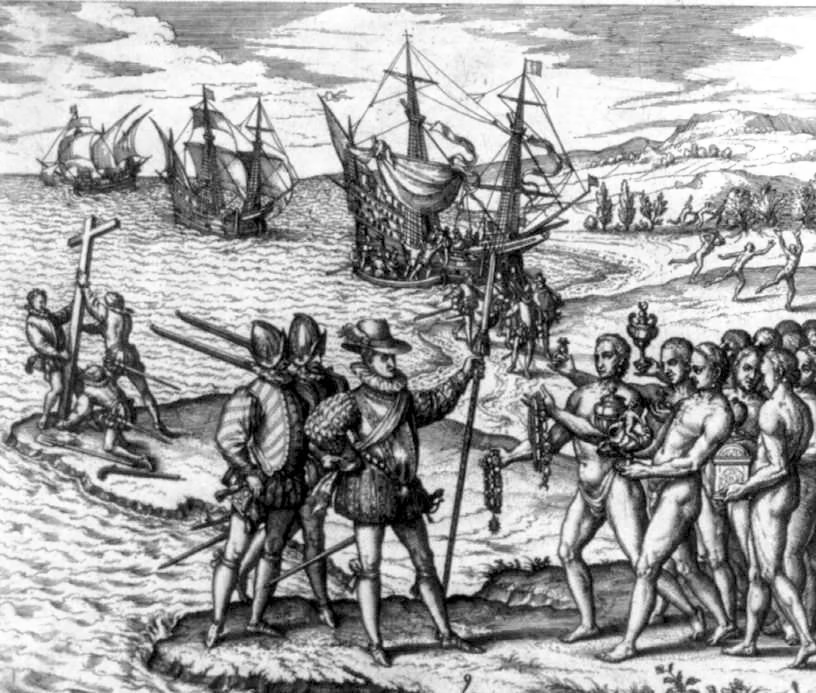
Before the arrival of Europeans, Hispaniola was inhabited by the Taíno people. The name Haiti, derived from their language, referred to the island or part of it before European colonization. After Christopher Columbus’s arrival in 1492, the island was gradually incorporated intothe Spanish Empire and was given the name La Española, which later became Hispaniola.
Starting in the 17th century, the western part gradually came under French control. In 1697, the Treaty of Ryswick officially recognized the French presence in this part of the island, which became the colony of Saint-Domingue. The eastern part remained Spanish and became Santo Domingo.
Why was Saint-Domingue one of the richest colonies in the world?
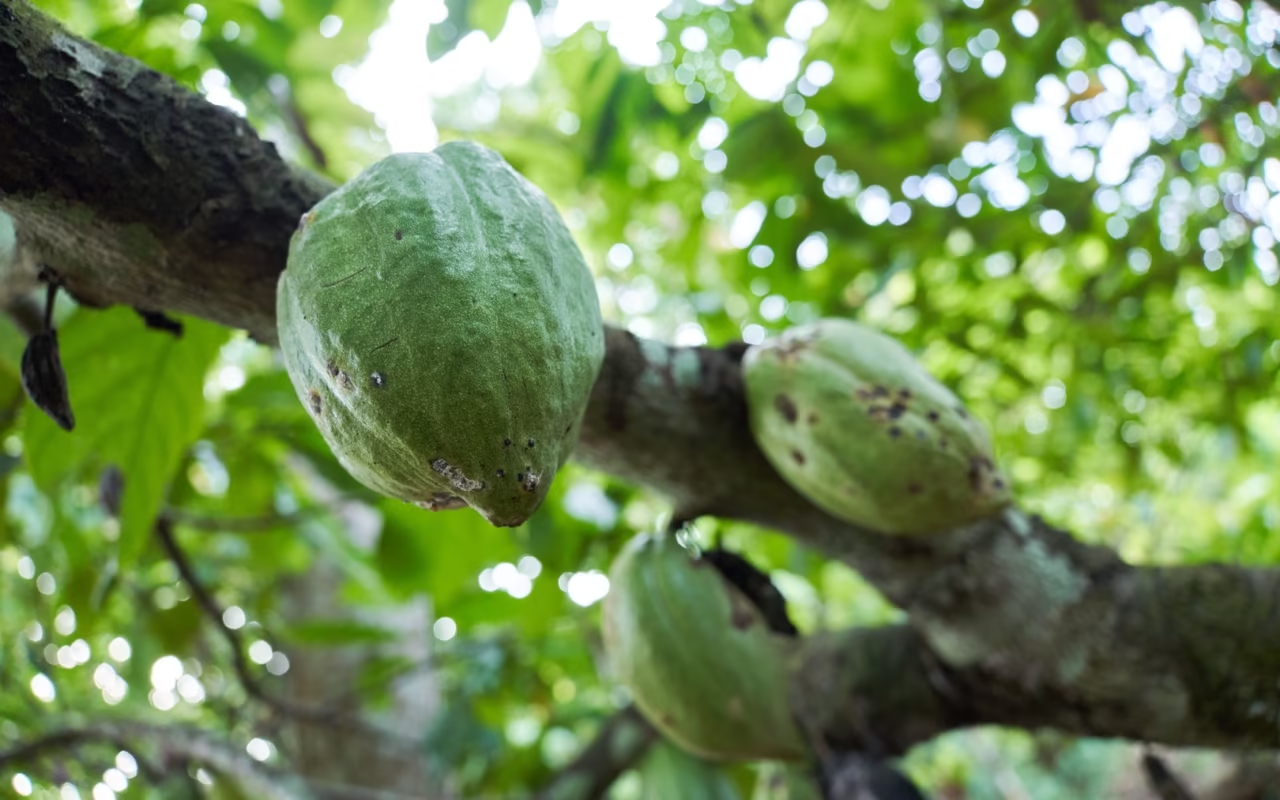
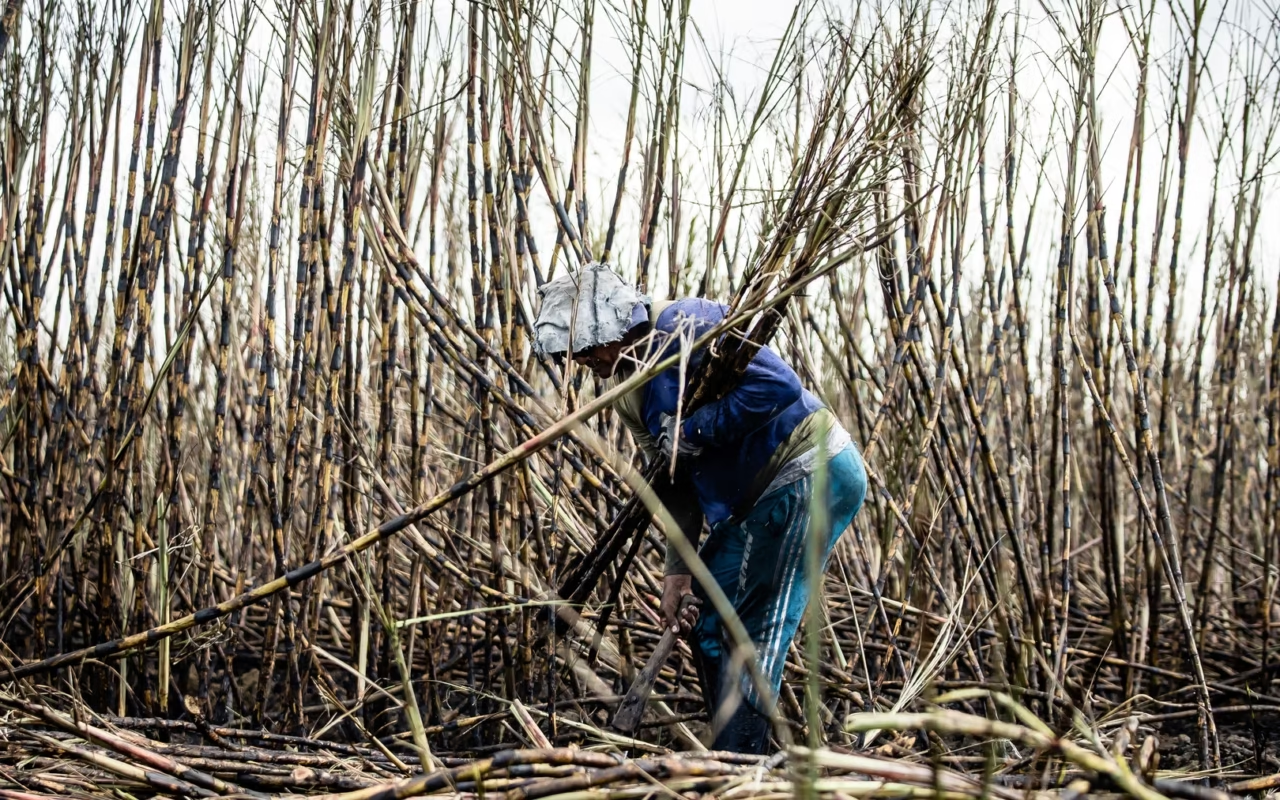
On the eve of the Haitian Revolution, Saint-Domingue had become the richest colony in the French Empire, thanks in large part to its sugar, coffee, andindigo plantations. This prosperity was built on an extremely violent system of exploitation of enslaved people.
By the end of the 18th century, the colony produced approximately 40 percent of the sugar and 60 percent of the coffee imported into Europe. This wealth therefore came at a considerable human cost: hundreds of thousands of Africans were deported to Saint-Domingue to work on the plantations.
In 1804, after thirteen years of revolution and war, Haiti declared its independence. The country thus became the first state to emerge from a victorious slave revolt, and the name Haiti was officially adopted.
Why have the two countries followed such different paths?
After gaining independence in 1804, Haiti experienced numerous periods of political instability, compounded by economic and institutional challenges and a high vulnerability to natural disasters. These factors have had a lasting negative impact on the country’s development.
Today, the economic contrast with the Dominican Republic is particularly striking. In 2025, GDP per capita was $2,694 in Haiti, compared to $11,059 in the Dominican Republic—more than four times higher on the other side of the island. That same year, Haiti’s GDP declined by 2.7 percent, while that of the Dominican Republic grew by 2.1 percent.
This difference cannot be explained by a single factor: the two countries have followed different political, economic, and institutional trajectories since the 19th century. Political stability, institutions, infrastructure, human capital, and investment have all played a role in their development trajectories.
The Dominican Republic, in particular, has experienced strong growth driven by services, investment, exports, and tourism, while remittances and foreign direct investment also make significant contributions to its economy.
Two cultures that intersect every day
How many Haitians live in the Dominican Republic?
The Dominican Republic is home to a large Haitian community. According to the International Organization for Migration, nearly 500,000 Haitians were living in the Dominican Republic in 2020. The IOM also highlights the historical importance of this migration in sectors such as agriculture and construction.
However, their presence is not limited to plantations. Haitians now work in many sectors of the Dominican economy, including construction, agriculture, services, and certain tourism-related activities.
Where can you hear Haitian Creole spoken in the Dominican Republic?
In areas with large Haitian communities, Haitian Creole is part of the everyday linguistic landscape. In tourist areas, it’s also possible to meet people who speak several languages, including Creole, Spanish, and sometimes French.
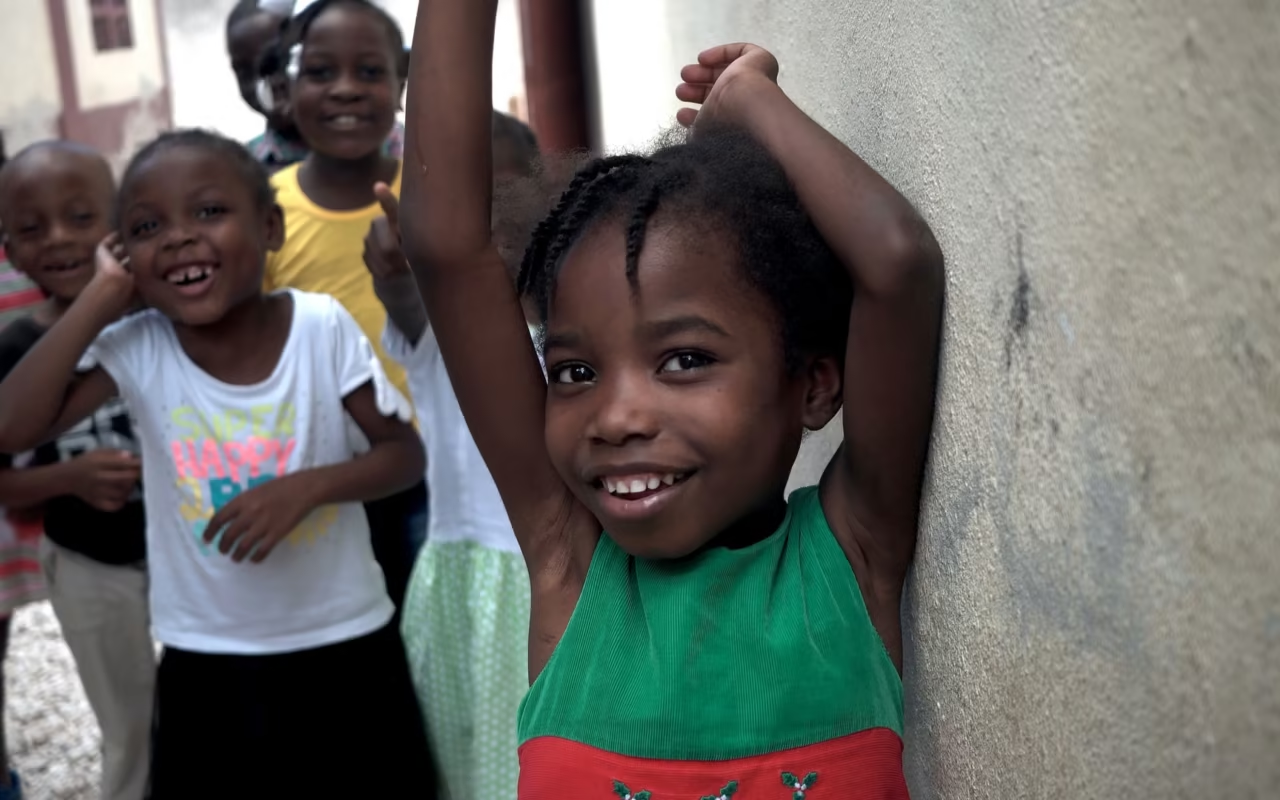
Fun fact: For a English-speaking traveler, hearing French in a hotel, restaurant, or during a conversation can come as a surprise. But behind this ease of communication lies, above all, a much broader reality of migration: hundreds of thousands of people have been moving back and forth between the two societies for decades.
A Cuisine with Shared Flavors
What are the common influences in Haitian and Dominican cuisines?
Haitian and Dominican cuisines have developed under African, European, and Indigenous influences, combined with ingredients and techniques specific to the Caribbean environment.
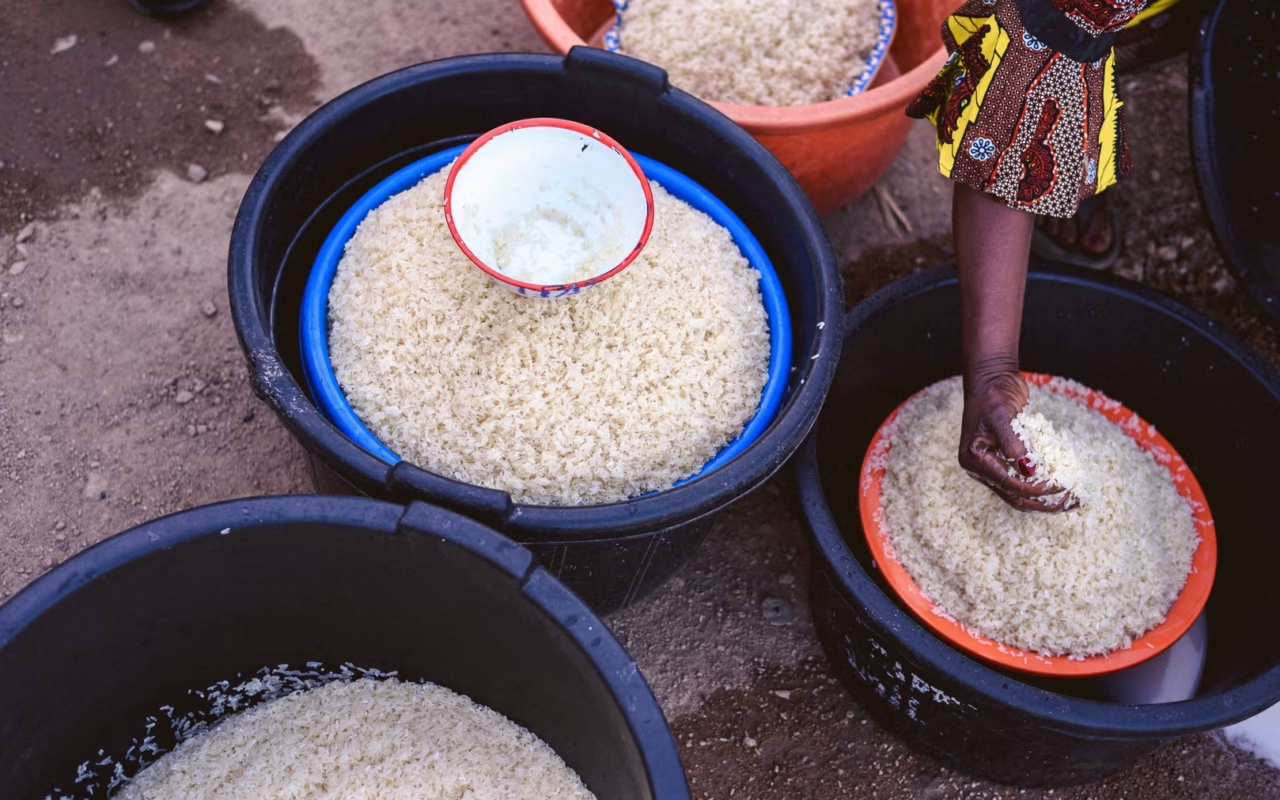
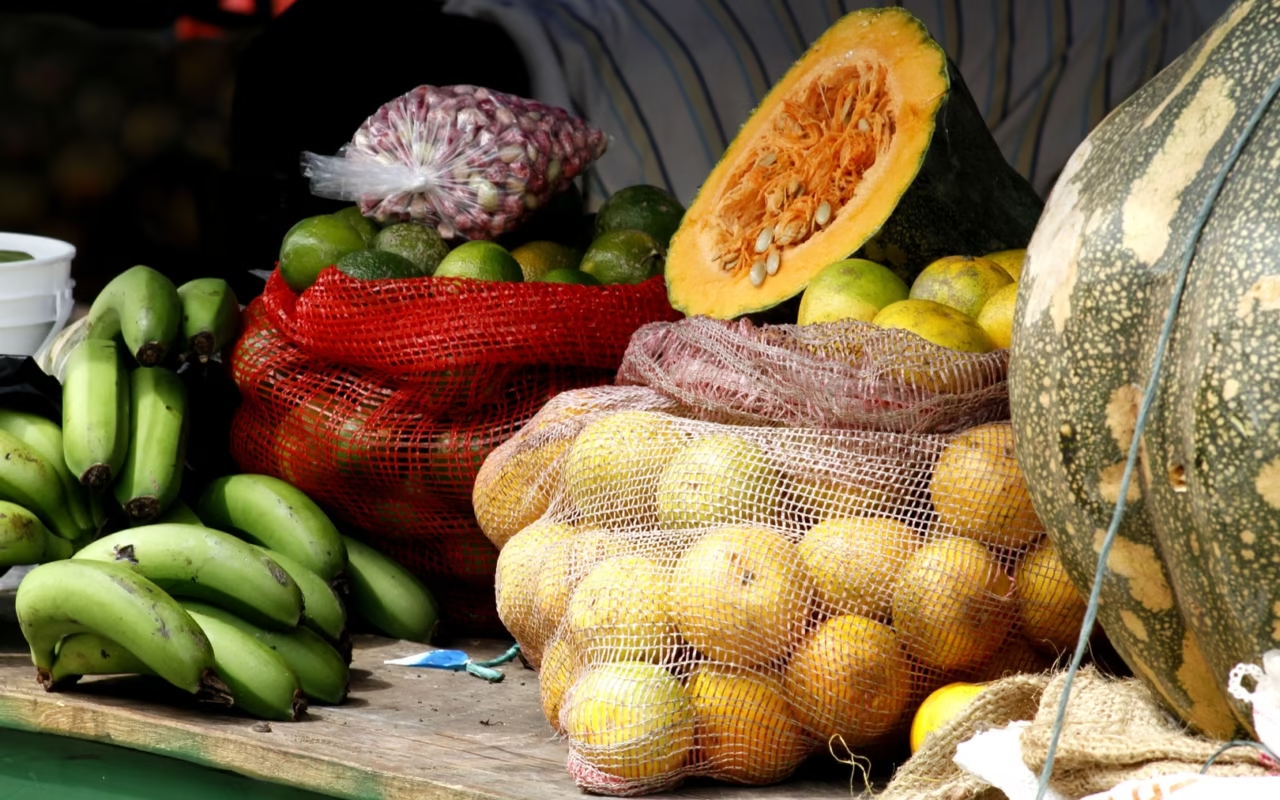
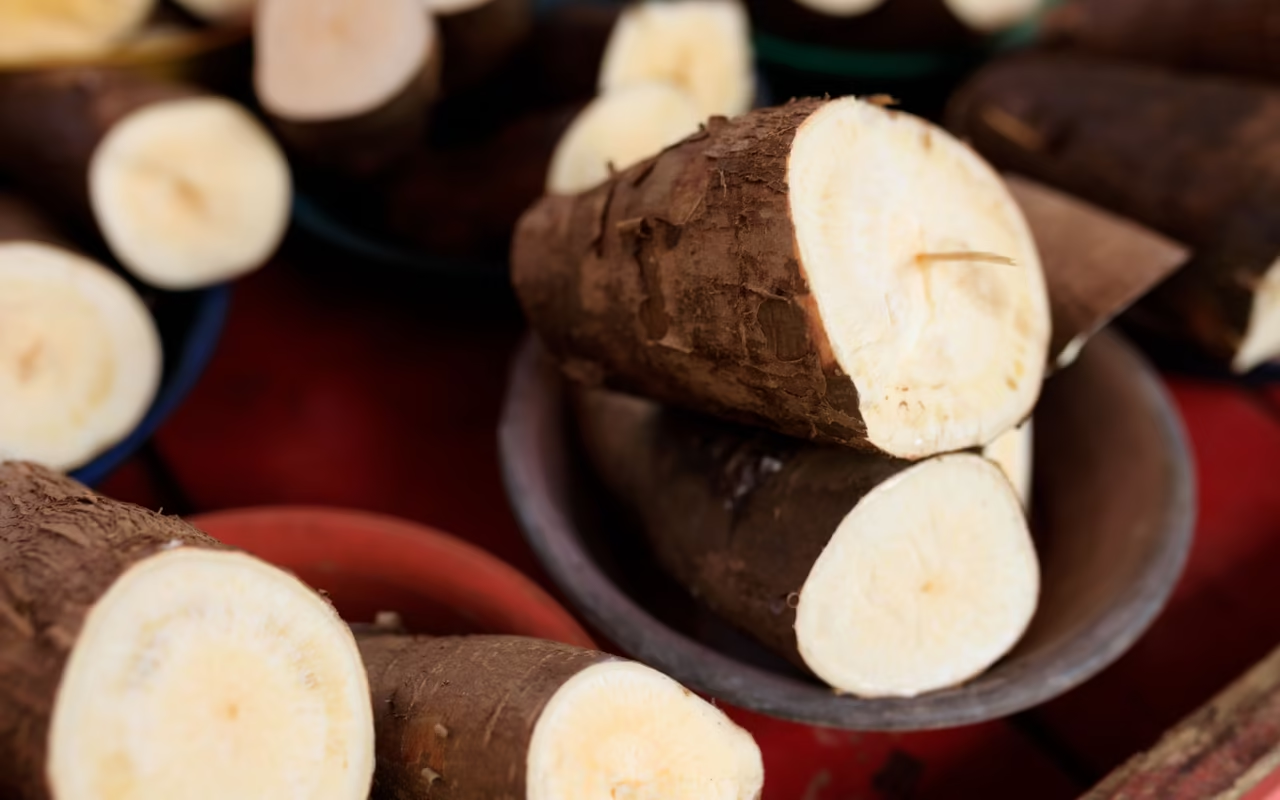
Both cuisines feature familiar ingredients: rice, beans, plantains, cassava, coconut, fish, meat, and numerous tropical fruits.
That doesn’t mean, however, that the two cuisines are identical. Each has its own recipes, seasonings, and traditions.
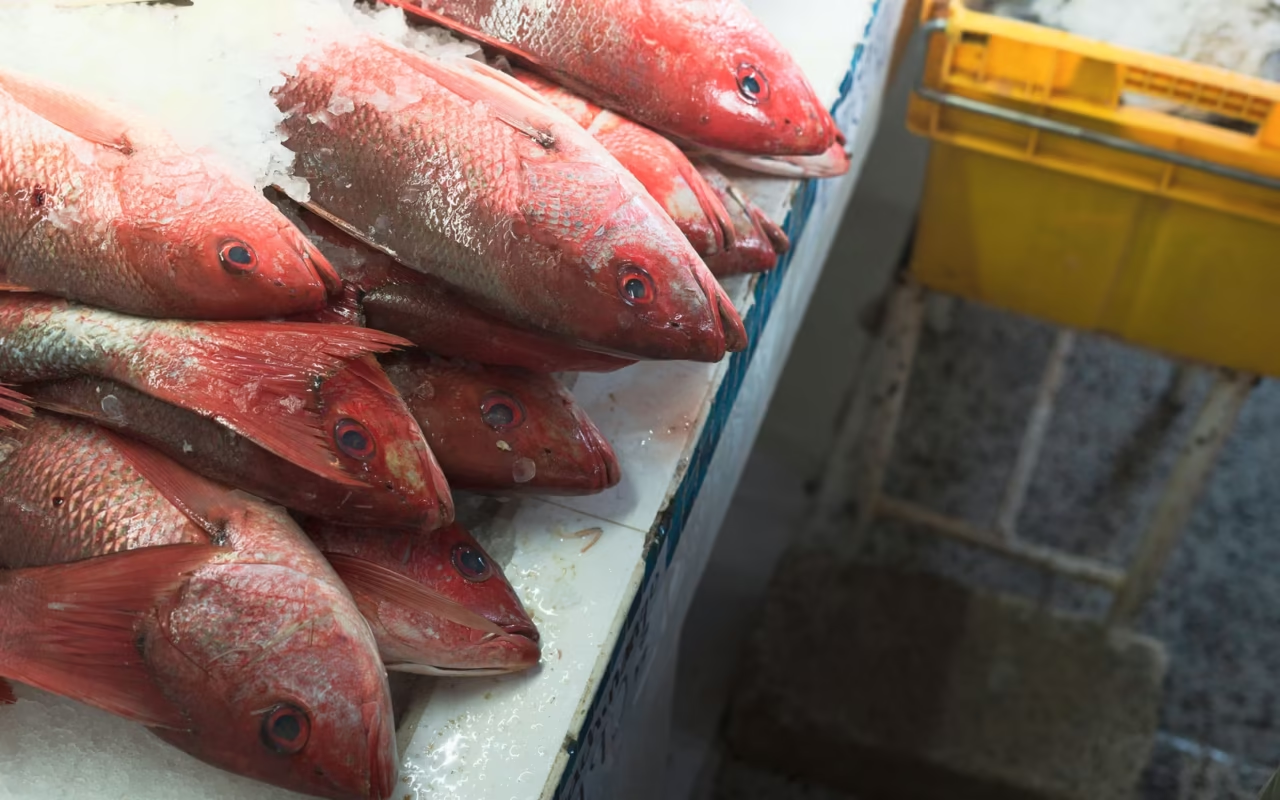
While there, Laura enjoyed discovering several small Haitian eateries in Santo Domingo. One of her favorites was located near the Conde, one of the capital’s main thoroughfares. In a warm atmosphere filled with the sounds of zouk, she enjoyed a delicious dish of spicy coconut-baked fish, a zesty coleslaw, and a rum punch with Caribbean flavors. It was a wonderful way to discover, just around the corner, a Haitian culture that’s very much alive in the Dominican Republic.
Music and Dance: The Rhythm of an Entire Island
What Haitian music should you listen to in order to discover the country’s culture?
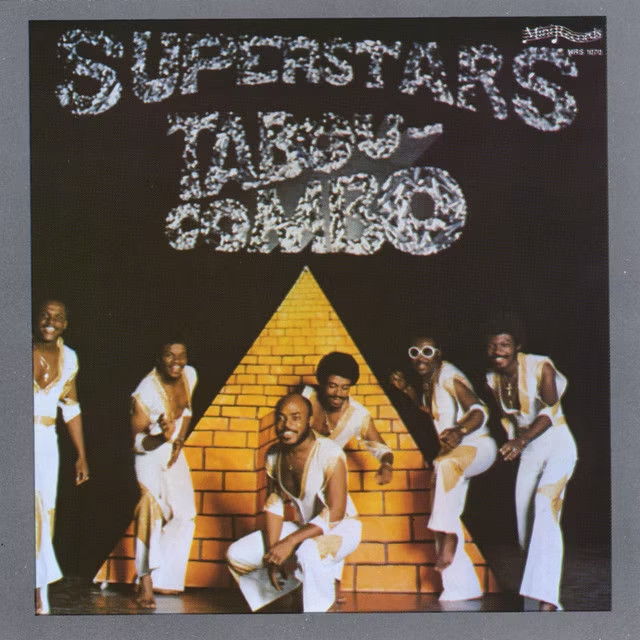
It’s impossible to talk about Haitian culture without mentioning music.Konpa, which emerged in the 1950s—notably through Nemours Jean-Baptiste—has become one of the Caribbean’s major musical genres. Among its key ambassadors:Tabou Combo, formed in 1968.
TheDominican Republic, too, pulses to the rhythm of its music. Bachata and merengue, listed as UNESCO Intangible Cultural Heritage, are at the heart of its identity.
WithTerra Dominicana, discover their history, origins, and influences—particularly those from Haiti—through meetings and dance classes with our experts. Bateys, community gatherings, traditions… these are all keys to understanding why, even today,people dance on every street corner.
In the Dominican Republic, you don’t have to be a dancer—just let the rhythm carry you away!
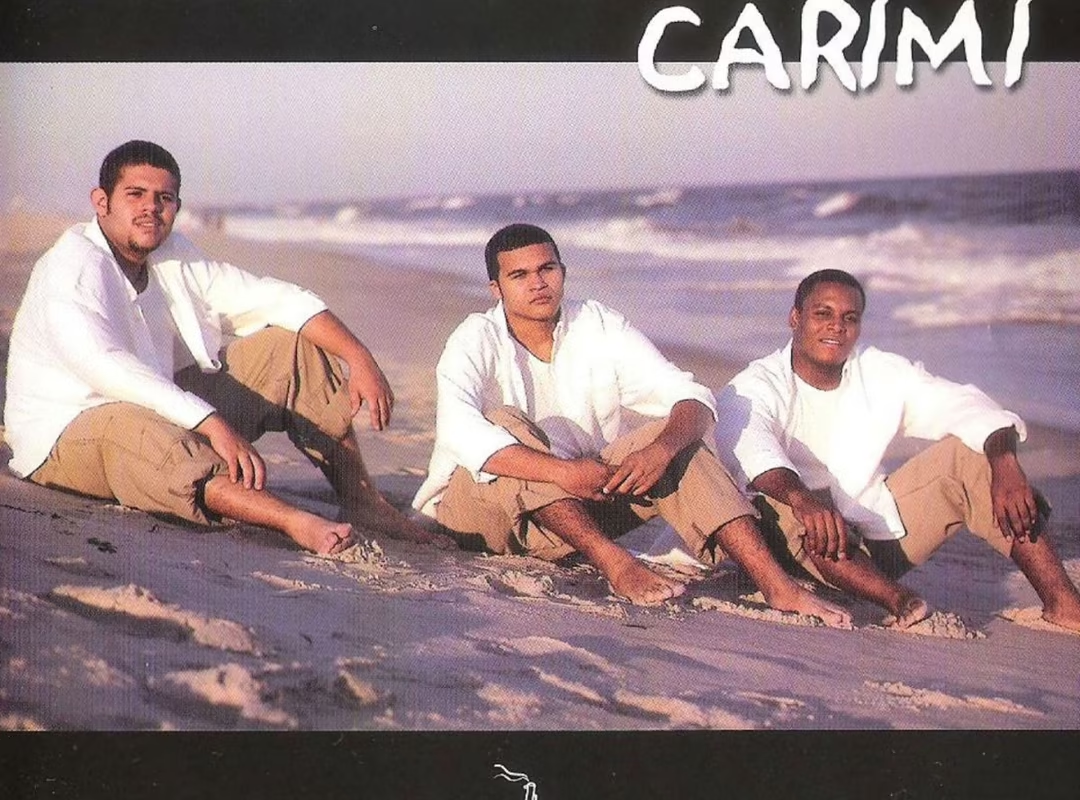
Carimi – Ayiti (Bang Bang)
Released in2004, this iconic track by the Haitian band Carimi celebrates Haiti’s identity and culture with a catchykonpabeat. It’s a must-listen for anyone wanting to immerse themselves in Haitian music.
Tabou Combo – Mabouya
Released in1978,“Mabouya”is a true classic inTabou Combo’s repertoire. With its festive rhythm and infectious energy, the song perfectly captures the spirit of Haitian kompa and naturally invites listeners to dance.
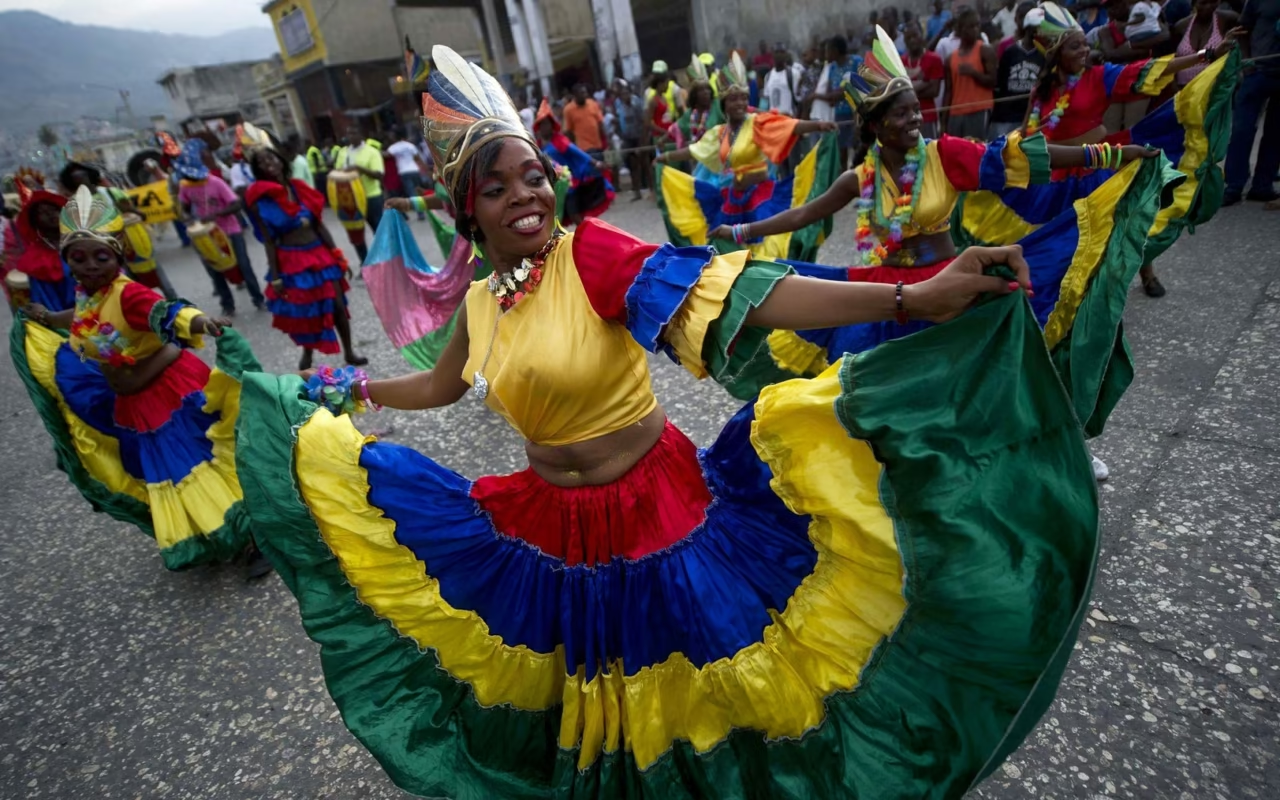
And what about zouk?
Zouk did not originate in Haiti: it developed in the French West Indies, particularly in Guadeloupe and Martinique. But today it is part of the Caribbean music scene and has become widely popular in Haitian communities.
To explore Haitian music specifically, it’s best to start with konpa, then move on to rara, traditional music, and the many artists who have helped spread Haitian culture beyond the island.
At the border: a place of exchange between two peoples
What are bateyes?
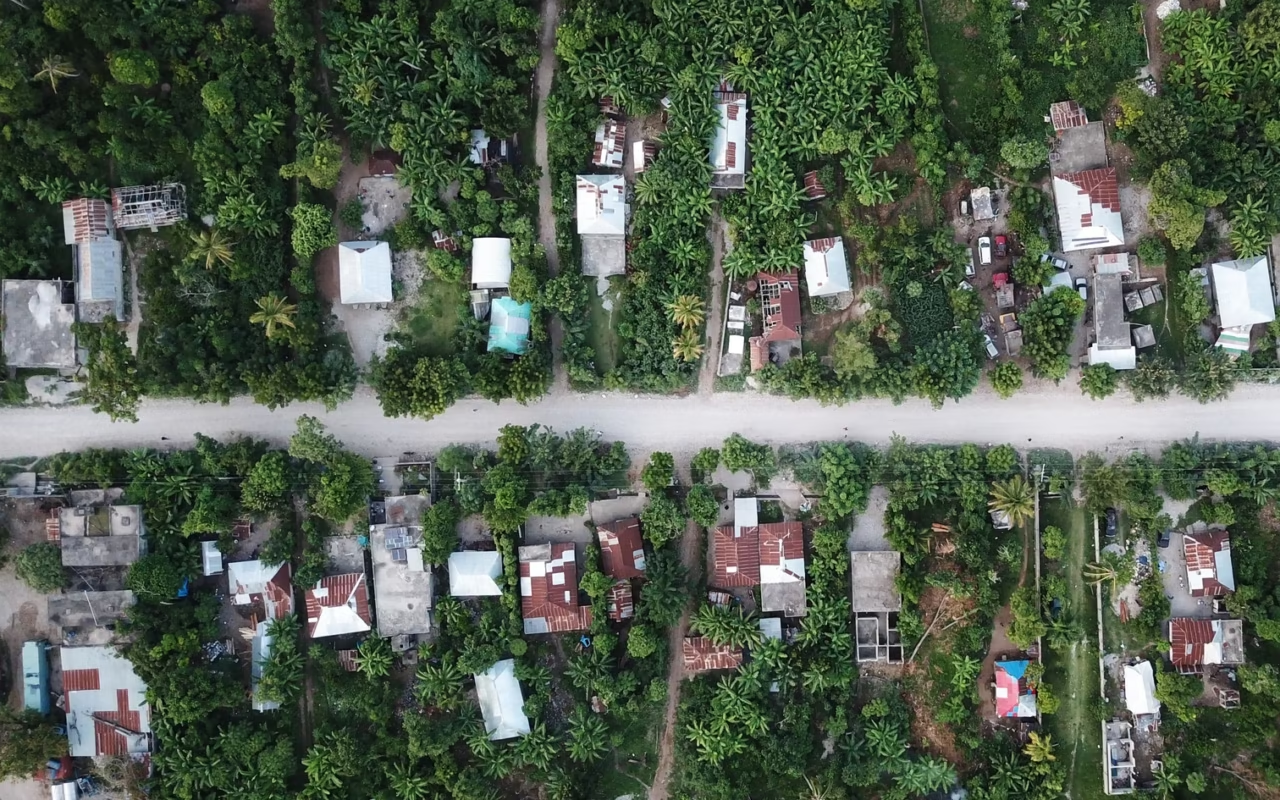
Historically, the word “batey” refers to the villages associated with sugarcane plantations in the Dominican Republic. In particular, they were home to Haitian workers who came to work in the sugar industry.
According to the UNDP (2015), the Dominican Republic had approximately 425 bateyes at that time, home to nearly 200,000 people.
These villages tell a complex social story, marked by sugarcane labor, migration, and the difficult living conditions of many families—some of whose hardships persist to this day. But they are also places where a language, traditions, music, and a strong cultural identity are passed down.
Visiting them as a French person isn’t necessarily problematic, provided you do so with respect and without turning the residents’ hardships into a tourist attraction. On the contrary, responsible tourism can have a positive impact by supporting the local economy, small businesses, and cultural initiatives, while allowing visitors to better understand the history and identity of these communities.
Our tip:Stay at a small ecolodge near Punta Cana and explore the plantations bye-bike, accompanied by a local guide. It’s an immersive way to meet the locals, learn about their daily lives, and discover the history of these areas in a different way.
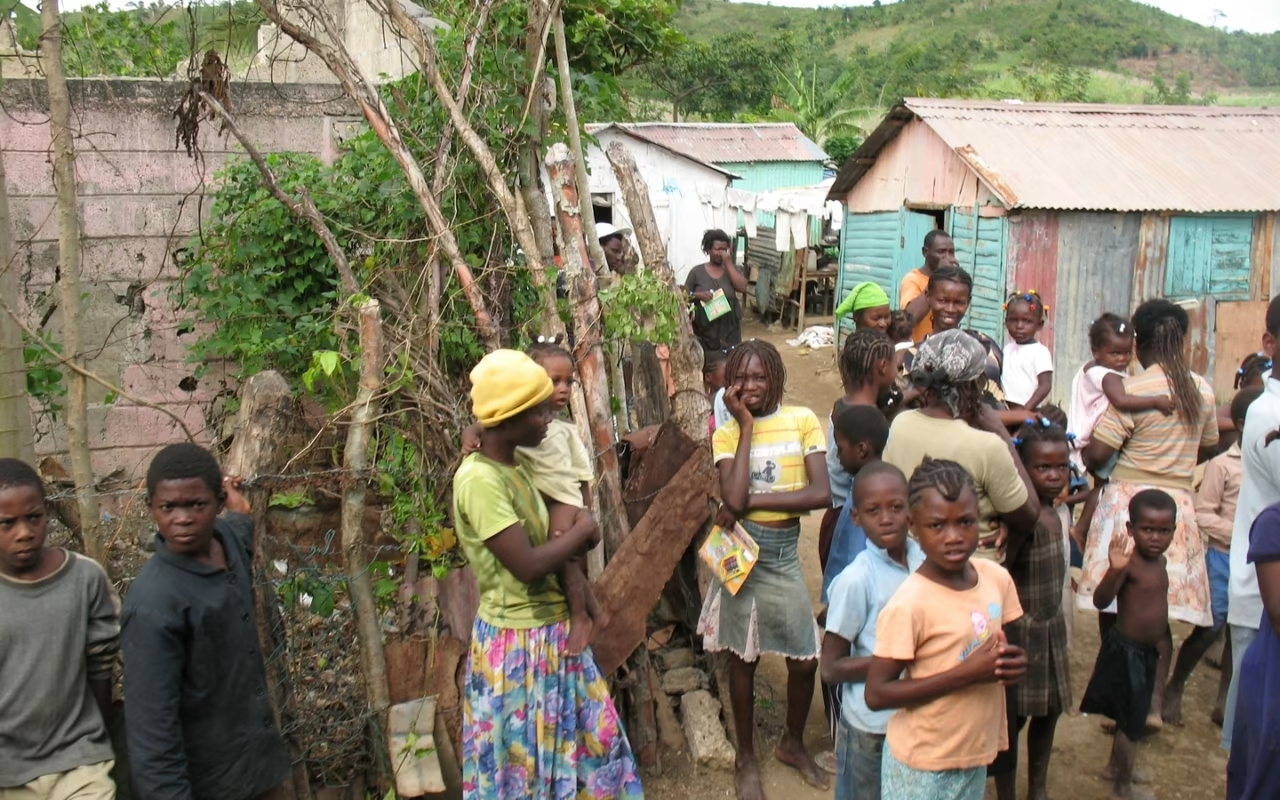
What can be found in border markets?
The border between Haiti and the Dominican Republic has long been a hub of trade. The IOM describes the flow of people and goods between the two countries as particularly significant and complex, with several border crossings monitored as part of its observation systems.
In some markets on the Dominican side, one can see clothing, food products, handicrafts, andother goods moving between the two countries.
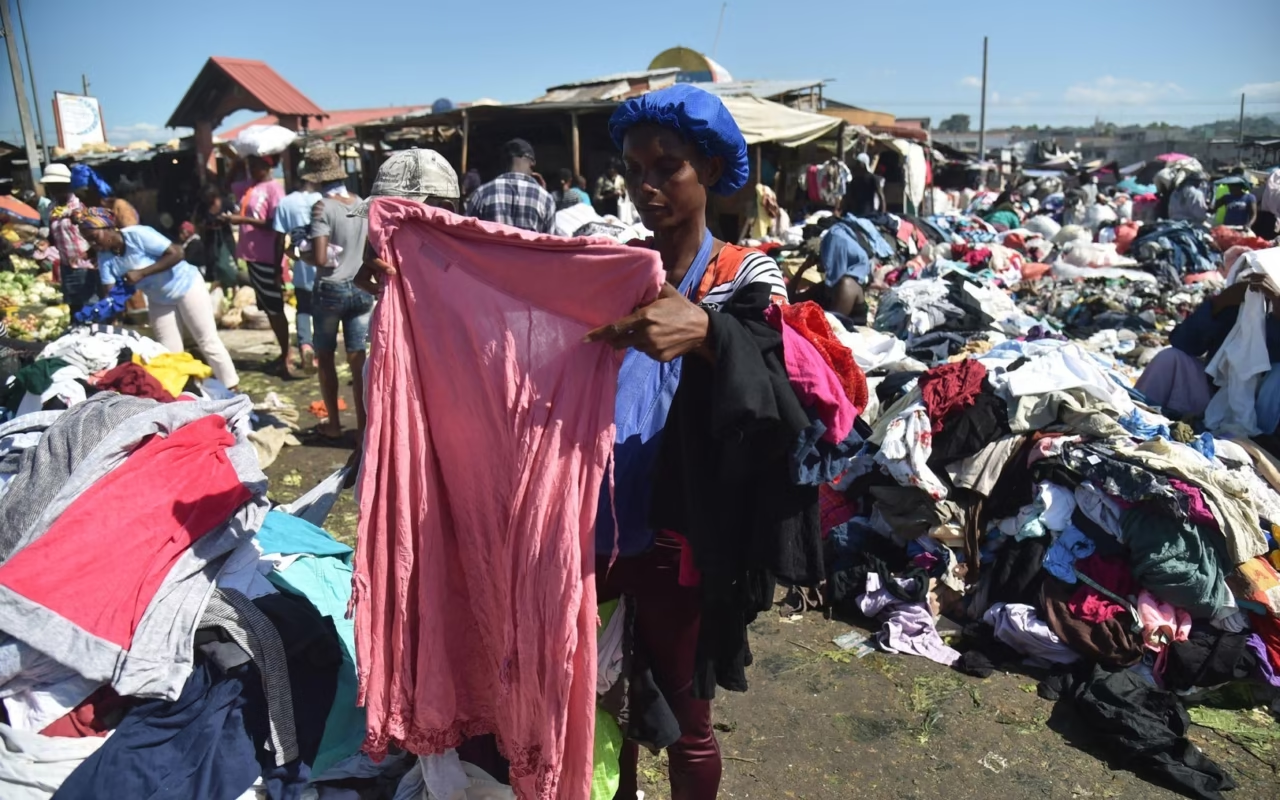
Keep in mind: These markets aren’t tourist attractions in the traditional sense. They are, first and foremost, places where local people live and do business. If you’d like to explore them, it’s best to do so with a local guide and stay on the Dominican side.
Traveling to the Dominican Republic to Gain a Better Understanding of Haiti
Is it possible to experience Haitian culture without visiting Haiti?
Yes, but it’s more a matterof exploring shared influences and history rather than “discovering Haiti” in the Dominican Republic.
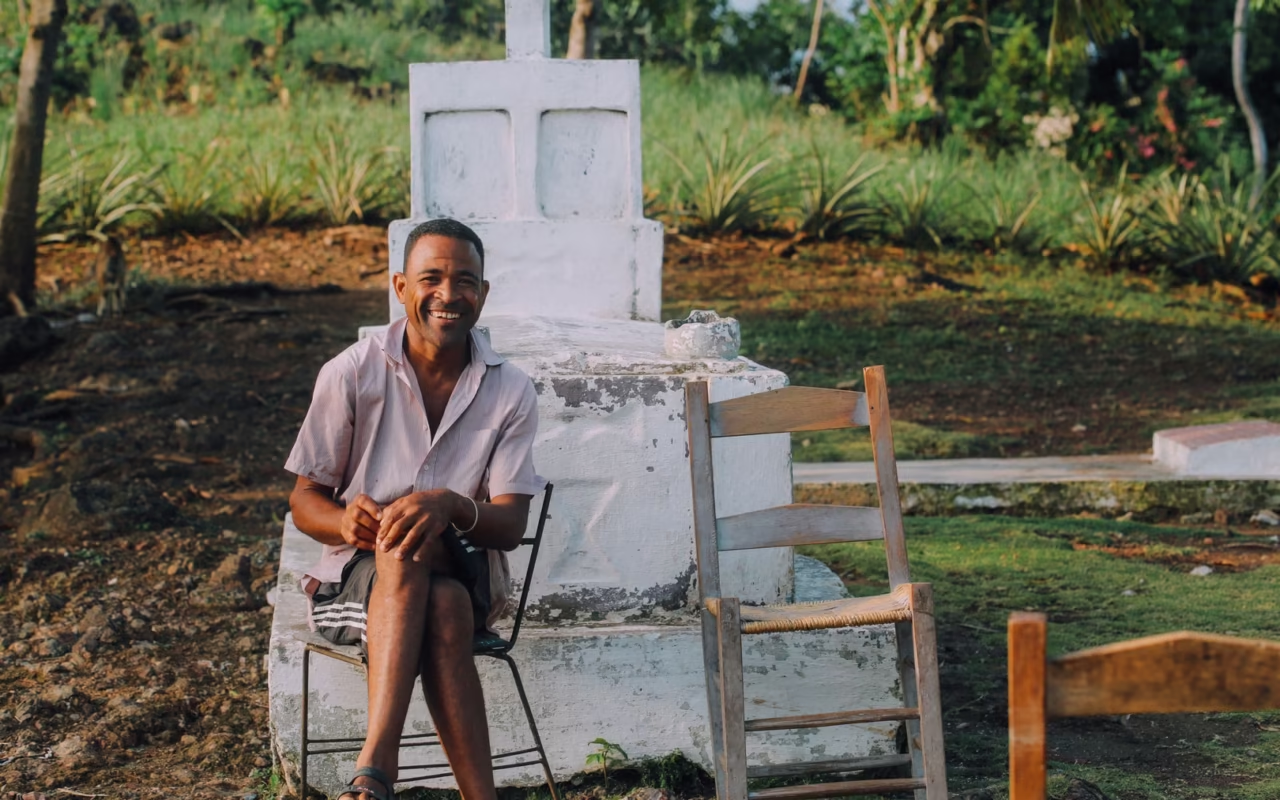
In certain regions of the Dominican Republic, particularly near the border, travelers can see tangible traces of this shared history: a language, music, a recipe, a market, or even an encounter with a Haitian family that has lived there for several generations.
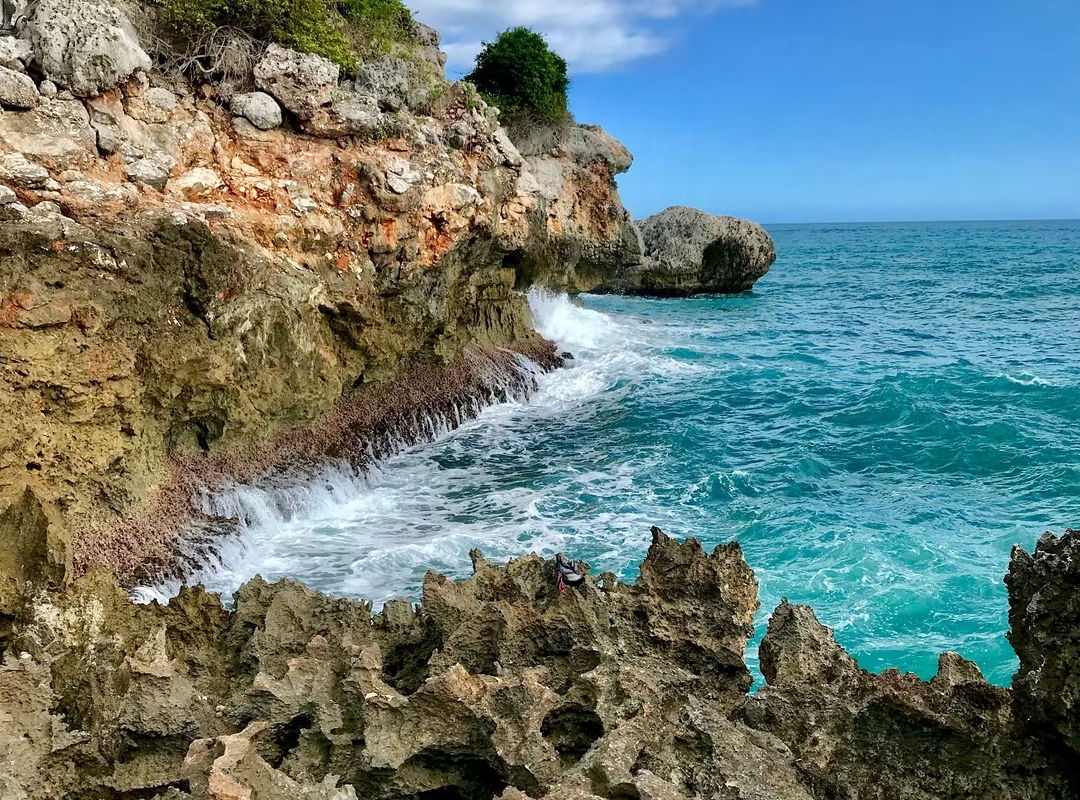
For example, when staying in Pedernales, you’re just a few minutes from the border with Haiti. This offers an opportunity to explore the exchanges between the two countries and, depending on local availability, to sample or purchase some Haitian products, such as Prestige beer or Barbancourt rum.
It’s a tangible way to understand the history and influences that connect the two sides of Hispaniola, while discovering a Dominican culture that has its own distinct identity.
What experiences can help us better understand this history?
Depending on your itinerary, several experiences can add another dimension to your trip:
- discovering the local cuisine and certain Haitian-influenced specialties;
- listening to konpa or exploring Caribbean music;
- traveling to more remote regions of the Dominican Republic to experience rural life and agricultural traditions that are still very much alive;
- visiting certain regions near the border with a local guide;
- learning about the history of the bateyes and sugarcane;
- observe the activity at the border markets on the Dominican side;
- interact with members of the Haitian community;
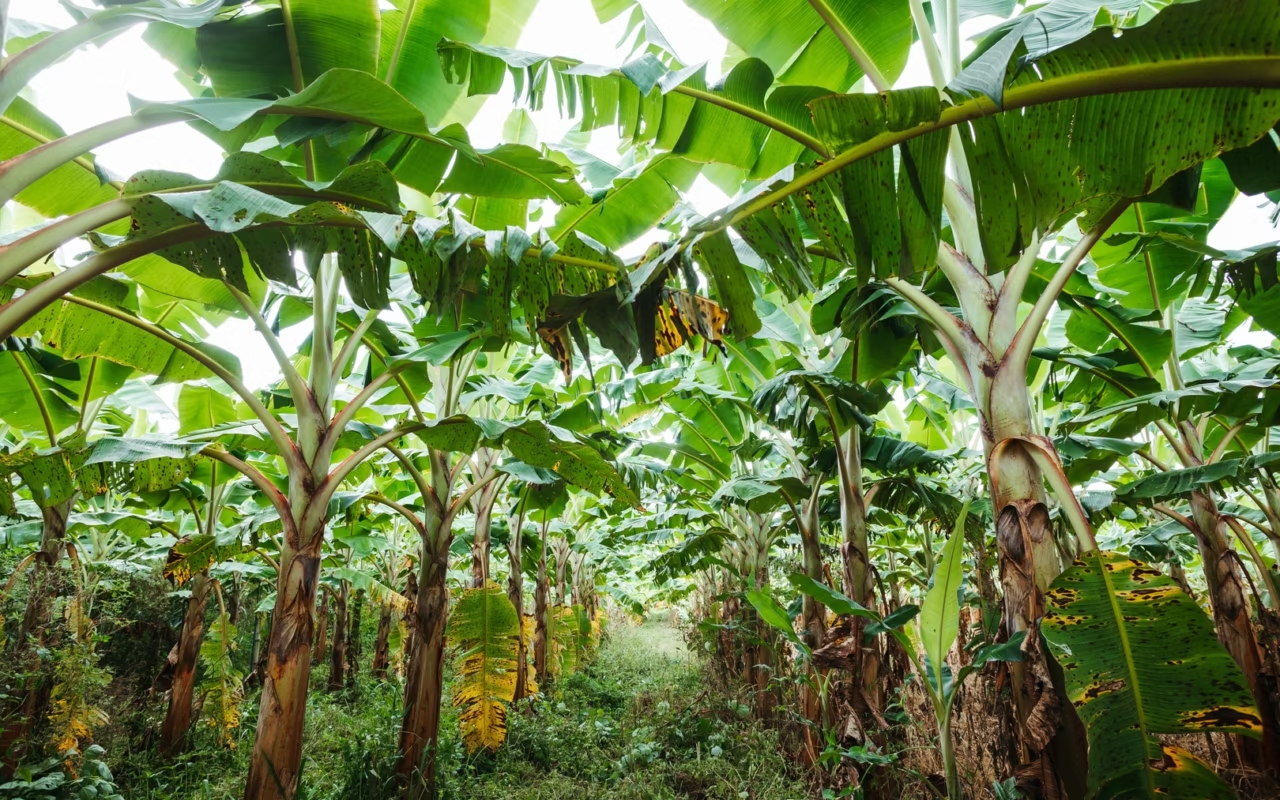
- get away from major tourist centers and discover certain rural areas of the Dominican Republic, where traditional ways of life, agricultural skills, and rural work still play an important role in local life.
The goal is not to turn Haiti into merely a sightseeing destination, but to gain a deeper understanding of the human and historical ties that exist on an island shared by two countries.
AtTerra Dominicana, we believe that understanding this history is essential to discovering the Dominican Republic in a new light.We create custom-designed trips: tell us your travel desires and wishes, and we’ll tailor your itinerary and experiences to meet your expectations.
FAQ
Can you visit Haiti from the Dominican Republic?
No, not under current conditions. France Diplomatie reports that the land, air, and sea borders between Haiti and the Dominican Republic are currently closed. The ministry also classifies all of Haiti as an area where travel is strongly discouraged and recommends postponing any travel.
Is there a large Haitian community in the Dominican Republic?
Yes. In 2020, the IOM estimated that nearly 500,000 Haitians were living in the Dominican Republic, representing about 4.5% of the country’s population. This long-standing migration plays an important role in the economy, particularly in agriculture, construction, and other sectors.
Is Dominican cuisine similar to Haitian cuisine?
Some influences and ingredients are shared, including plantains, rice, beans, cassava, and coconut. But both cuisines have their own recipes, techniques, and traditions.
Can you experience Haitian culture without visiting Haiti?
Yes, to some extent. Music, cuisine, languages, Haitian communities, bateyes, and trade allow you to observe certain aspects of this culture in the Dominican Republic. Of course, this is no substitute for experiencing Haiti itself.
A single island can tell two stories
Haiti and the Dominican Republic have developed distinct identities, but their histories remain deeply intertwined. Today, while the security situation prevents safe tourist travel to Haiti, the Dominican Republic offers a glimpse into certain traces of this shared history.
A song heard in a bar, a dish tasted in a restaurant, a few words of Creole, a border market, or a chance encounter can sometimes be enough to add another layer of depth to the journey.
Discovering the Dominican Republic also means understanding the island on which it is located: an island with multiple histories, intertwining cultures, and bonds that continue to be forged.
Birdwatching Tour in the Dominican Republic: tropical birdwatching
Diving Tour in the Dominican Republic: private or small-group tours
Adventure Trip to the Dominican Republic & Climb of Pico Duarte
Cultural Trip to the Dominican Republic: Rum, Coffee, Cigars & Heritage
Luxury Travel in the Dominican Republic at charming eco-lodges
Luxury Trip to the Dominican Republic High-end tour
Nature Tour in the Dominican Republic: Waterfalls, Cenotes, and Untouched Beaches
A Getaway in the Dominican Republic: Encounters, Adventures, and Wellness
About the Author
Elisa EPENOY is a member of the TERRA Dominicanateam andis passionate about cultural and authentic travel. She is particularly interested in the southern regions of the island of Hispaniola and enjoys discovering local communities, traditions, and crafts.
She has personally visited the Barahona region twice, including one trip dedicated to exploring villages, pristine beaches, and ecolodges.
Passionate about sustainable tourism and Caribbean cultures, Elisa has guided more than 10 travelers on their journeys through the Dominican Republic and shares her expertise through Terra Dominicana’s guides and articles.
Main Sources
- France Diplomatie — Travel Advice, Safety, and Entry Requirements for Haiti, 2026.
- World Bank — Comparative Economic Data for Haiti and the Dominican Republic, 2024.
- UNESCO — History of Santo Domingo and Haitian Historical Heritage, 1990.
- UNESCO — Historic National Park, Citadel, Sans-Souci, and Ramiers, 1982.
- Caribbean Studies / OpenEdition — History and Contemporary Reality of Dominican Bateyes, 2019.