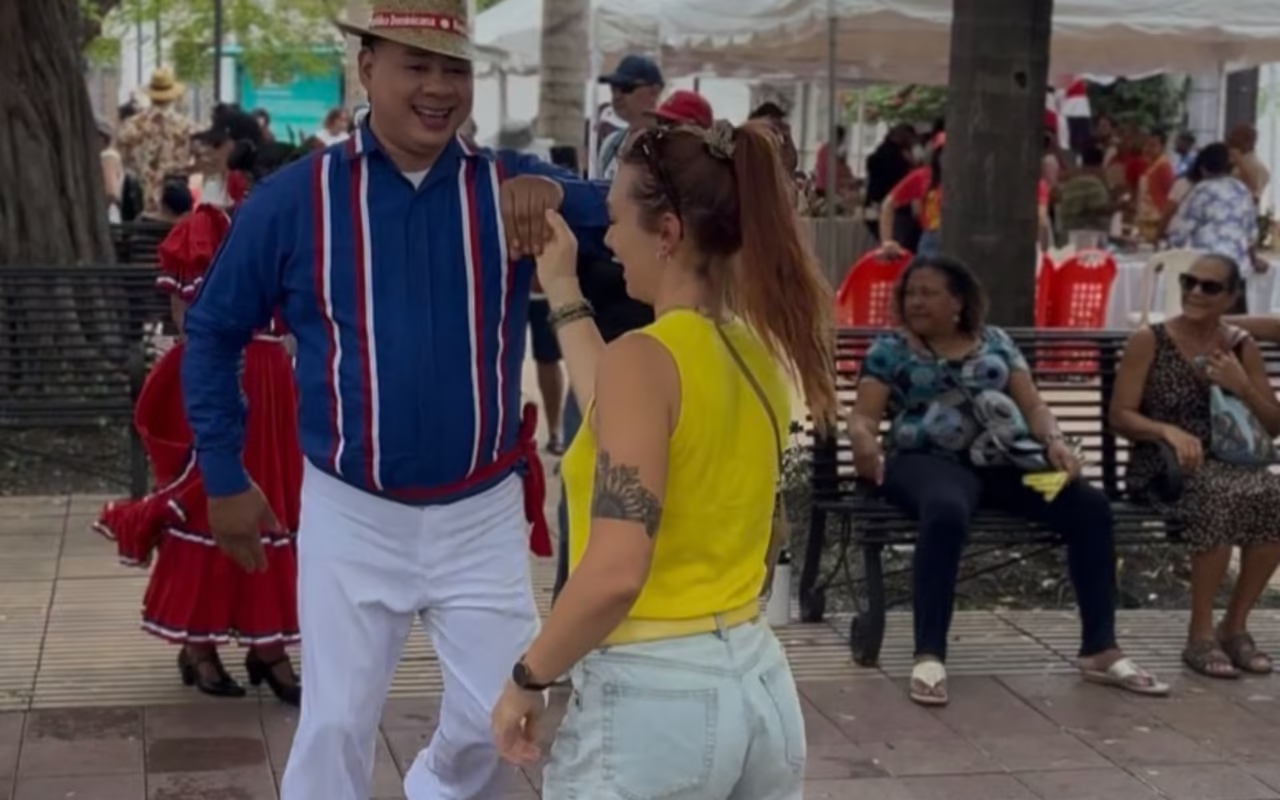
In the Dominican Republic, music is never far away. It accompanies family celebrations, political campaigns, get-togethers with friends, and nights of dancing in the colmados. It shapes social life.
Three rhythms define the country’s musical identity: merengue, a national symbol; bachata, which has become a global phenomenon; and dembow, the contemporary urban voice. These genres are inextricably linked to the culture andhistory of the Dominican Republic. You can also find events and festivals in our cultural calendar.
Merengue: the national dance
Origins
Originating in the rural areas of the country’s north (particularly in the Cibao region), merengue took shape around the accordion, the tambora, and the güira, giving rise to merengue típico or perico ripiao. It is not a single genre but an entire world of music: merengue típico, orquesta-style merengue, 1980s merengue, merenhouse, urban merengue, and merenguetón.
Listed in 2016 as part of UNESCO’s Intangible Cultural Heritage, it is celebrated every November 26 on National Merengue Day. Major festivals take place in Santo Domingo and Puerto Plata.
How do you dance the merengue?
Merengue is danced in pairs, with simple, quick steps that follow the continuous rhythm of the music. Accessible and fun, it’s often learned from childhood onward, through observation and imitation, at family celebrations and community gatherings.
Leading Artists
Juan Luis Guerra, Johnny Ventura, Wilfrido Vargas, Sergio Vargas.
Bachata: Passion and Melancholy
Origins
Long considered the folk music of working-class neighborhoods, bachata emerged from a fusion of bolero, Cuban son, merengue, and Afro-Caribbean influences. Inscribed on the UNESCO List of Intangible Cultural Heritage in 2019, it is now a global phenomenon.
Rhythm & Instruments
It is played in a 4/4 time signature, with guitars (often electric), bongos, güiro, and bass.
How is bachata danced?
Bachata is danced in pairs to an eight-beat rhythm. The hip movements, which are more pronounced and sensual, accompany an emotional interpretation of the music. More than just a choreographed routine, bachata is a dance of connection. Classes are available in Santo Domingo and Cabarete.
Leading Artists
Romeo Santos, Aventura, Prince Royce, Juan Luis Guerra (during his bachata period).
Dembow: Urban Energy
Origins
Emerging in the 1990s and 2000s, dembow has its roots in Jamaican dancehall. The genre developed in working-class neighborhoods, driven by DJs, independent producers, and the bootleg distribution of cassettes.
Characteristics
Dembow is instantly recognizable by its infectious beat (100 to 120 BPM), featuring a repetitive rhythmic pattern inherited from dancehall. The vocals are often rapid and chanted, and the lyrics address festive, urban, or everyday themes. It has become a true form of self-expression for a segment of Dominican youth.
Leading Artists
El Alfa, Rochy RD, Tokischa, Secreto, DJ Boyo (pioneer). Today, dembow is spreading worldwide and blending with trap and reggaetón.
Music That Shapes Society
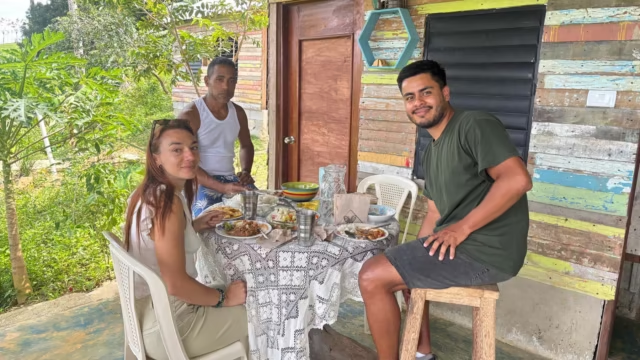
In the Dominican Republic, music creates connections and brings together all social classes. From neighborhood colmados to major international stages, these rhythms shape Dominican identity. Did you know that Dominican cuisine is often enjoyed to the beat of merengue in colmados?
FAQ – Dominican Music
What is the difference between merengue and bachata?
Merengue is faster and more festive, with a consistent rhythmic structure. Bachata is slower, more melodic, and more emotional.
Is dembow the same thing as reggaeton?
No. Although they share common roots, dembow is more repetitive, more percussive, and retains a more urban and raw character.
Where can you learn to dance in the Dominican Republic?
In many cities such as Santo Domingo, Puerto Plata, or Cabarete. There are more than 100 bachata schools in the country.
Is merengue really the national symbol?
Yes. It has been listed as part of UNESCO’s Intangible Cultural Heritage since 2016 and is officially celebrated every November 26.
Conclusion
Dominican music isn’t just something to listen to—it’s something to dance to, share, and experience. At Terra Dominicana, we incorporate this vibrant aspect into our itineraries: dance classes with local instructors, authentic cultural evenings, immersion in artistic neighborhoods, and participation in festivals. Check out our Art, Culture & Heritagesectionto discover all the cultural experiences available.
About the Author
Laura Grenouillet is the founder of Terra Dominicana. Passionate about Caribbean culture, she designs itineraries that highlight the country’s living cultural expressions: music, dance, local traditions, and regional heritage.