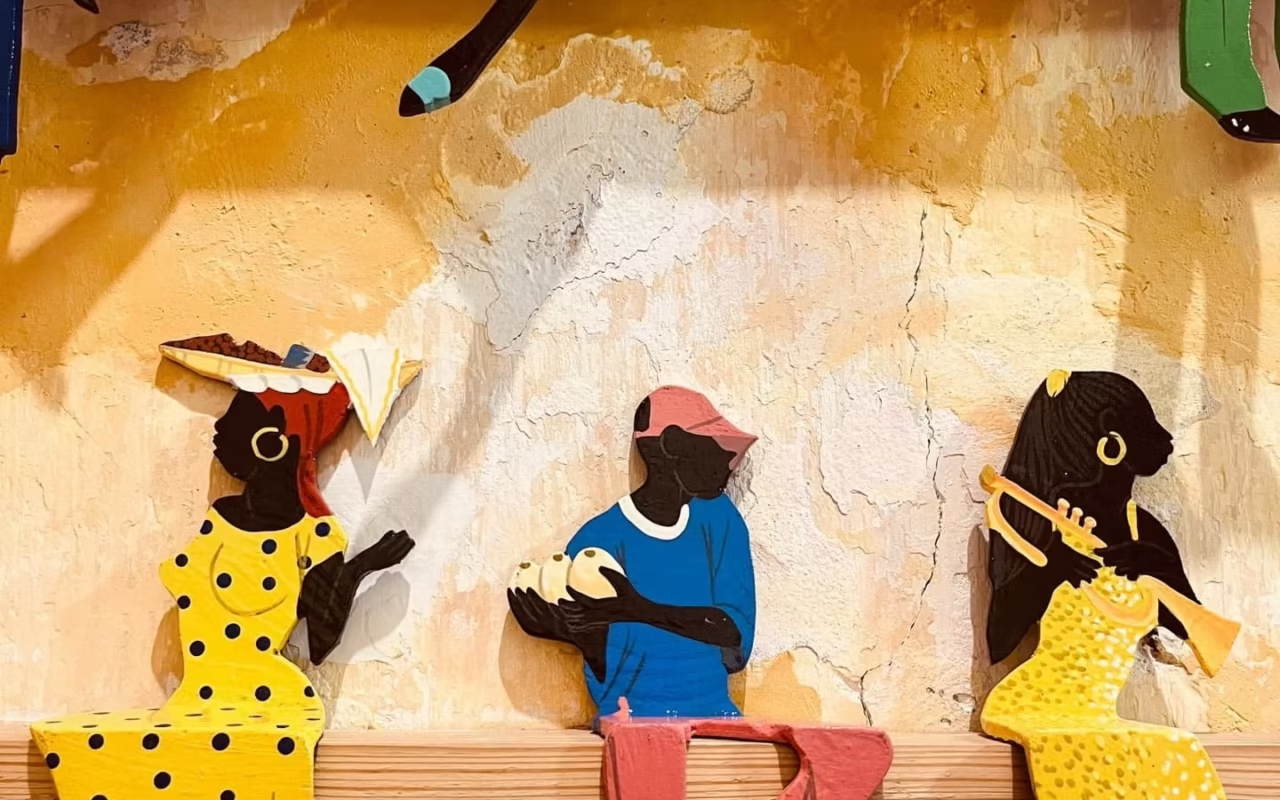
To understand the Dominican Republic is also to understand its land. Long before the colonial plantations, the Taíno people cultivated cassava and corn and crafted pottery and ritual sculptures. Later, sugarcane, cacao, and tobacco shaped the economy and transformed the landscape. Read our article onthe history of the Dominican Republic to better understand this legacy.
Today, these agricultural and artisanal traditions continue to shape the country’s identity. Amber and larimar, cacao and mountain coffee, rum aged in a tropical climate, and cigars from the Cibao: the Dominican Republic is a land of materials and traditions passed down for centuries. Want to experience this craftsmanship? Explore our Art, Culture & Heritage section.
Mineral Treasures: Amber and Larimar
Dominican Amber
Found mainly around Puerto Plata, Dominican amber is renowned for its perfectly preserved fossil inclusions. It serves as a rare geological artifact and a testament to a local craft that is still thriving today. The Amber Museum in Puerto Plata is a must-see for lovers of natural curiosities.
Larimar
Discovered in the 20th century in the Barahona region, larimar is a turquoise-blue stone found nowhere else in the world. Its color evokes the waters of the Caribbean. It is found only in the wild southwestern Dominican Republic, making it a rare and precious travel souvenir.
The Cultures That Shape the Country
Why are Dominican cigars so renowned?
The Dominican Republic is now the world’s leading producer of premium cigars. Three factors account for this reputation:
- The terroir: the Cibao valleys, particularly around Santiago and La Vega, offer rich soils and ideal microclimates.
- Expertise: leaves dried, fermented, sorted, and rolled by hand by experienced torcedores.
- Consistency: an industry that has been well-established since the 20th century, capable of producing premium cigars with a strong artisanal character.
Regions to visit: Santiago, La Vega, and Bayahibe / La Romana.
Dominican cocoa
The Dominican Republic is one of the world’s leading producers of organic cacao. It has preserved a diverse genetic base, particularly of the Trinitario variety. Dominican cacao has some of the lowest cadmium levels in the world. Plantation tours are available in the Northwest and Central-East regions.
Mountain coffee
Dominican coffee first appeared in the 18th century and thrived in mountainous areas. Primarily Arabica, grown under shade by family-run farms, it offers fruity, cocoa, and chocolate notes. More than 100,000 hectares are cultivated in the key regions of Barahona and Pedernales, the Central Cordillera (Jarabacoa and Constanza), and the Cibao.
Dominican Rum: A Legacy of Sugar and Tropical Excellence
In the Dominican Republic, rum is not just a spirit— it is a liquid memory. Born from sugarcane introduced in the 16th century, it has been part of the country’s history since colonial times. Under the Caribbean heat, rum ages more intensely in oak barrels, resulting in profiles that are often smoother, with notes of caramel, vanilla, and toasted wood.
Historic distilleries such as Bermúdez (founded in 1852) and Brugal (established in Puerto Plata in 1888) have shaped this identity. Some distilleries can be visited in the Puerto Plata and Cibao regions. And sharing a glass of rum in a colmado to the beat of Dominican music remains one of the country’s most authentic experiences.
| Product | Featured Region | Distinctive Feature |
|---|---|---|
| Cigar | Cibao (Santiago, La Vega) | World’s leading producer of premium cigars |
| Cocoa | Northwest, Central-East | World’s leading producer of organic cacao |
| Coffee | Barahona, Central Mountain Range, Cibao | Shade-grown Arabica, 100,000+ hectares under cultivation |
| Rum | Puerto Plata, Cibao, La Vega | Accelerated aging due to the tropical climate |
| Amber | Puerto Plata | Rare fossil inclusions |
| Larimar | Barahona (Southwest) | A stone unique in the world, turquoise blue |
FAQ – Dominican Terroirs
Can we visit cocoa plantations?
Yes, mainly in the Northwest and Central-East regions. These tours provide insight into the harvesting, fermentation, and drying of the beans.
Why are Dominican cigars famous?
The rich terroirs of the Cibao region, the expert fermentation of the leaves, and the hand-rolling by torcedores explain their worldwide reputation.
Can you visit a rum distillery?
Yes, particularly in the La Vega and Puerto Plata regions, where some distilleries welcome visitors.
Conclusion
From the Taíno zemís to rum barrels, from larimar mines to tobacco fermentation sheds, the Dominican Republic is a land of resources and cultural heritage. Exploring its regions means understanding its history. Check out our ideas for cultural getaways on the Art, Culture & Heritage page.
About the Author
Laura Grenouillet is the founder of Terra Dominicana. She designs custom trips that highlight local regions, craftsmanship, and encounters with locals, working with a carefully selected network of partners throughout the country.